
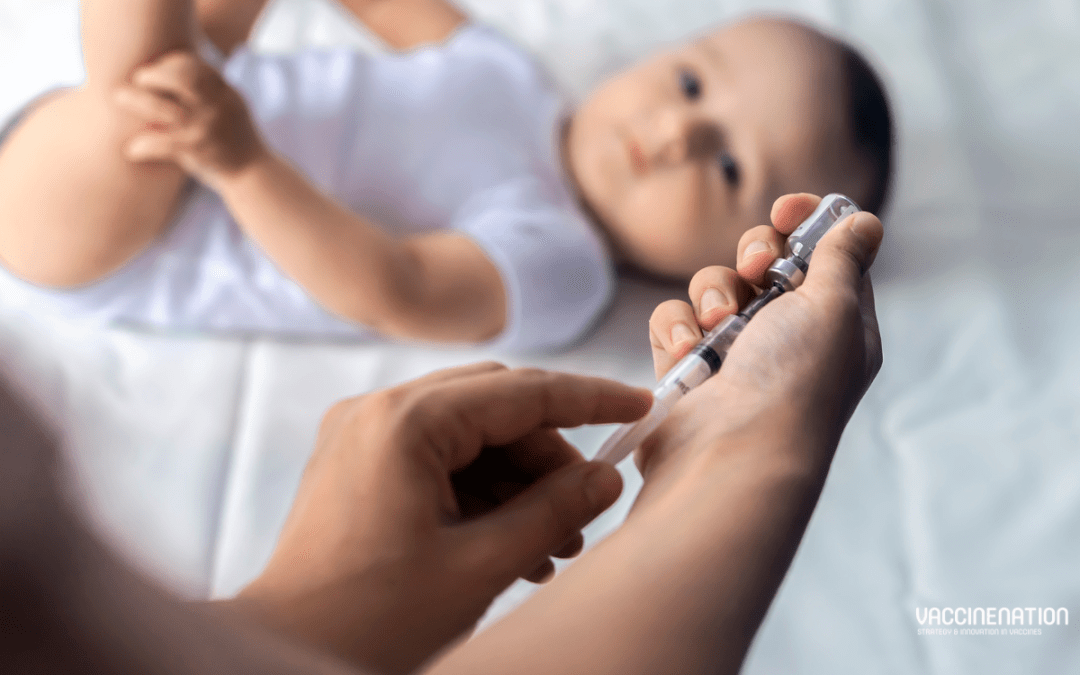
In July 2024 WHO and UNICEF shared that data on global childhood immunisation from 2023 reveals that 2.7 million additional children were left “un- and under-vaccinated” compared to pre-pandemic levels in 2019. The WHO and UNICEF estimates of national immunisation coverage (WUENIC) provide the “largest and most comprehensive” dataset on immunisation trends across vaccination against 14 diseases. The trends suggest that immunisation has stalled at insufficient levels, highlighting the need for “ongoing catch-up, recovery, and system-strengthening efforts”.
DTP coverage
The number of children who received three doses of the diphtheria, tetanus, and pertussis (DTP) vaccine in 2023, which is a key marker for global immunisation coverage, stalled at 84% (108 million). Unfortunately, the number of children who did not receive a single dose of the vaccine increased from 13.9 million in 2022 to 14.5 million 2023. A further 6.5 million children did not complete their third dose of the DTP vaccine.
“More than half of unvaccinated children live in the 31 countries with fragile, conflict-affected, and vulnerable settings, where children are especially vulnerable to preventable diseases because of disruptions and lack of access to security, nutrition, and health services.”
WHO and UNICEF are concerned that, while coverage has “remained largely unchanged since 2022”, it has not returned to 2019 levels. This reflects “ongoing challenges with disruptions in healthcare services, logistical challenges, vaccine hesitancy, and inequities in access to services”.
Measles outbreaks
The data also show that vaccination progress against measles stalled, which puts almost 35 million children at risk with “no or only partial protection”. In 2023, only 83% of children worldwide received their first dose of the measles vaccine. Although the number of children who received a second dose “modestly increased” from the previous year to reach 74% of children, the figures “fall short” of the 95% coverage required to prevent outbreaks, avert disease and deaths, and achieve measles elimination goals.
The effects of this are already being seen as measles outbreaks have struck 103 countries in the last five years, putting around three-quarters of the world’s infants at risk. This is attributed to low vaccine coverage (80% or less), with 91 countries with “strong” measles coverage not experiencing outbreaks.
WHO Director-General Dr Tedros Adhanom Ghebreyesus, described measles outbreaks as the “canary in the coalmine, exposing and exploiting gaps in immunisation and hitting the most vulnerable first”.
“This is a solvable problem. Measles vaccine is cheap and can be delivered even in the most difficult places. WHO is committed to working with all our partners to support countries to close these gaps and protect the most at-risk children as quickly as possible.”
HPV vaccine progress
Although overall trends may be disappointing, the data also reveal some “brighter spots in immunisation coverage”. This includes the “steady introduction” of new and under-utilised vaccines, such as for human papillomavirus (HPV), meningitis, pneumococcal, polio, and rotavirus disease, particularly in the 57 countries supported by Gavi. Indeed, Gavi-supported countries like Bangladesh, Indonesia, and Nigeria, are driving increased levels of protection with the introduction of the HPV vaccine. The percentage of adolescent girls globally who received at least 1 dose of the HPV vaccine increased from 20% in 2022 to 27% in 2023.
Dr Sania Nishtar, CEO of Gavi, suggests that the HPV vaccine is “one of the most impactful vaccines” in the Gavi portfolio.
“It is incredibly heartening that it is now reaching more girls than ever before. With vaccines now available to over 50% of eligible girls in African countries, we have much work to be done, but today we can see we have a clear pathway to eliminating this terrible disease.”
However, HPV vaccine coverage remains “well below” the 90% target for eliminating cervical cancer as a public health problem; it is reaching only 56% of adolescent girls in high-income countries and 23% in low- and middle-income countries. UNICEF research suggests that 75% of people who use its digital platform for young people are “unaware or unsure” of what HPV is. When informed about the virus and its links to cancers, as well as the existence of a vaccine, 52% of respondents indicated willingness to receive the vaccine but identified financial constrains (41%) and lack of availability (34%) as barriers.
IA2030
Although “modest progress” is being made, the data suggest a need to “accelerate efforts” to meet the Immunisation Agenda 2030 (IA2030) targets of 90% coverage and no more than 6.5 million “zero-dose” children by 2030. The IA2030 Partnership Council is demanding increased investment in innovation and continued collaboration.
UNICEF Executive Director Catherine Russell commented that “many countries continue to miss far too many children”.
“Closing the immunisation gap requires a global effort, with governments, partners, and local leaders investing in primary healthcare and community workers to ensure every child gets vaccinated, and that overall healthcare is strengthened.”
To join us at the Congress in Barcelona for more on boosting global immunisation progress, get your tickets here, and don’t forget to subscribe to our weekly newsletters for more vaccine updates.


