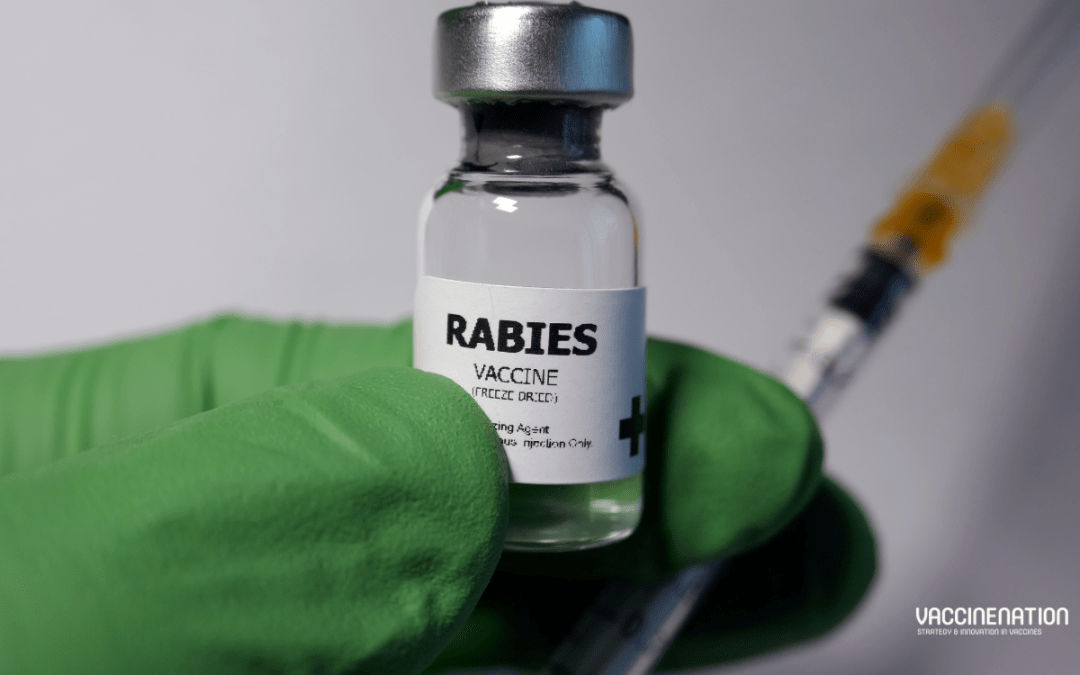
In June 2024 Gavi announced its support for human rabies vaccines for post exposure prophylaxis (PEP) within routine immunisation. Eligible countries will be given guidance on how to access these vaccines through Gavi’s cofinancing policy with the first round of applications to be accepted by mid-July 2024. This “complements ongoing global efforts” of the Zero by 30 campaign, led by the United Against Rabies Forum, seeking to eliminate all dog-mediated human rabies deaths by 2030. The campaign includes the Food and Agriculture Organisation (FAO), World Health Organisation (WHO), and World Organisation for Animal Health (WOAH).
Rabies
Rabies is a “serious public health problem” in more than 150 countries and territories. It is a viral, zoonotic, neglected tropical disease that causes “tens of thousands” of deaths each year. 40% of these are in children under 15. Gavi states that 95% of human rabies deaths occur in Africa and Asia, “most often in marginalised communities that lack access to care”. 99% of human cases are transmitted by a rabid dog.
“The deadly nature of rabies and its traumatic clinical presentation make it one of the world’s most feared diseases.”
Rabies deaths are preventable with “prompt” post exposure prophylaxis (PEP). However, in the over 150 countries where dog rabies continues to pose a serious public health problem, stocks of human rabies vaccines are “often extremely limited”. Where human rabies vaccines are available through private facilities, PEP can “impose a catastrophic financial burden on families and communities”.
Gavi’s commitment
All Gavi-eligible countries will be able to apply for support to invest in human rabies vaccines for PEP, but rabies immunoglobulins (RIG) and dog vaccines will not be covered. While countries are not required to have a national rabies control plan in place for the first round of multiyear funding, it will be “mandatory” for subsequent requests. Gavi will accept funding applications by 15th July and 23rd September 2024, with subsequent funding windows to open three times every year.
Gavi had initially intended to include human rabies vaccines for PEP in the 2021-2025 Vaccine Investment Strategy. However, the COVID-19 pandemic meant it was postponed until mid-2023, when the Gavi board elected to restart the programme. Dr Jérôme Salomon, Assistant Director-General for Universal Health Coverage, Communicable and Noncommunicable Diseases at WHO, described Gavi’s commitment as “crucial”, hoping it will “expedite efforts to halt human fatalities caused by dog-mediated rabies”.
“WHO will provide technical assistance to countries, not only to support their funding applications to Gavi but to draw up comprehensive plans of action that can deliver real progress towards the Zero by 30 goal.”
Chief Programme Officer at Gavi, Aurélia Nguyen, states that Gavi’s aim is to “contribute to the global rabies control effort and save lives by ensuring that human rabies vaccines are available to those that need them the most”. This is particularly important for the “vulnerable and marginalised communities that too often get left behind”. Professor Lucille Blumberg, Chair of the United Against Rabies Forum, recognised Gavi’s investment as “hugely important” and the underpinning of a “key pillar of the global strategy to stop people dying from this terrible disease”.
“But to stop human rabies deaths completely, we also urgently need better data and surveillance, dog populations must be vaccinated, and people must be educated about what to do if bitten, and how to avoid being bitten in the first place. Stopping human deaths from rabies is within our reach, but it will take multiple sectors working together to achieve it.”
For more on efforts to tackle infectious disease challenges through vaccination, why not subscribe to our weekly newsletters here?