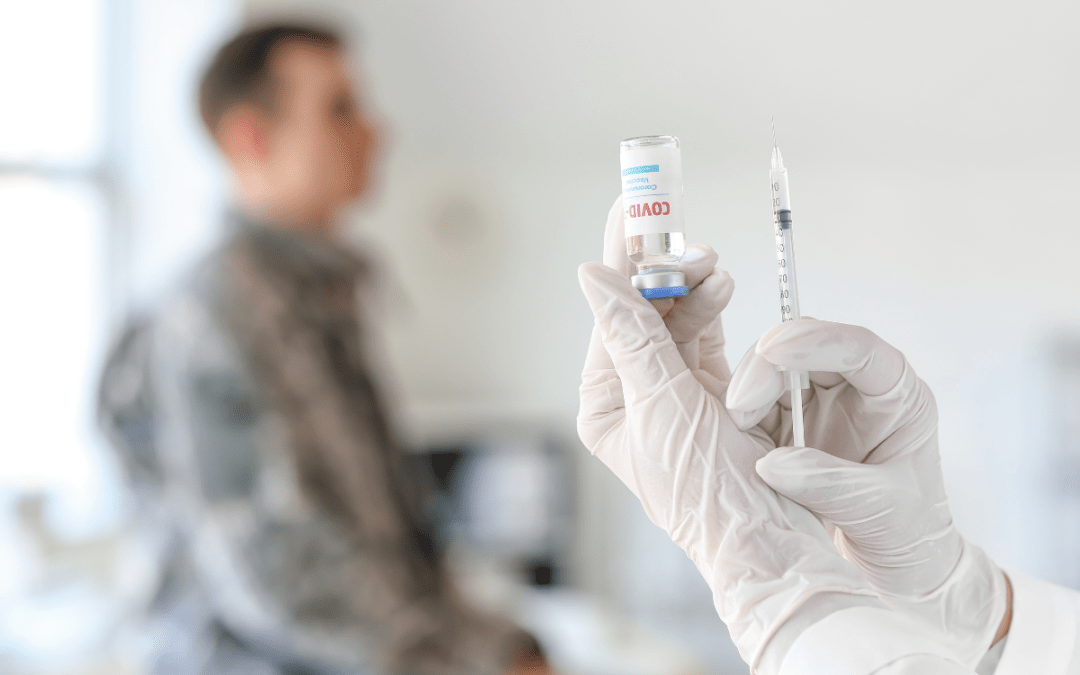
A study from the Global COVID Vaccine Safety (GCoVs) Project published in Vaccine in February 2024 explores the risk of 13 medical conditions to assess their relation to receipt of a COVID-19 vaccine. The observed versus expected rates study involved 99 million people across ten sites in eight countries. The authors confirmed pre-established safety signals for myocarditis, pericarditis, Guillain-Barré syndrome, and cerebral venous sinus thrombosis, and identified potential safety signals that “require further investigation”.
An unparalleled scenario with a pressing need
The paper states that “since the declaration” of the COVID-19 pandemic by WHO in March 2020, more than 13.5 billion doses of COVID-19 vaccines have been administered globally, with at least 70.5% of the world’s population receiving at least one dose of a vaccine by November 2023.
“This unparalleled scenario underscores the pressing need for comprehensive vaccine safety monitoring as very rare adverse events associated with COVID-19 vaccines may only come to light after administration to millions of individuals.”
The Safety Platform for Emergency vACcines (SPEAC) initiative anticipated the “unprecedented global rollout” in 2020 with a list of potential vaccine adverse events of special interest (AESI). Selection for AESI was based on “pre-established associations with immunisation, specific vaccine platforms or adjuvants, or viral replication during wild-type disease, theoretical concerns related to immunopathogenesis, or supporting evidence from animal models”.
The study
The observational cohort study compared observed with expected rates of 13 AESI across “neurological, haematological, and cardiac outcomes”. The expected rates were obtained through pre-COVID-19 vaccination healthcare data stratified by age and sex, and observed rates were reported from the same datasets since vaccination rollout. The study included 99,068,901 participants, with a total of 23,168,335 person-years of follow-up.
The findings
The study offers a uniquely large, systematically coordinated approach thanks to the setting of the GVDN. Eight countries were involved across “Europe, North America, South America, and Oceania”. Some of the key findings include the following; do read the full paper if you’d like to see more.
Guillain-Barré syndrome (GBS) is a rare autoimmune disorder of the nerves and has been linked to COVID-19 vaccination. Previous research into vector-based vaccines such as ChAdOx1 identified a “higher incidence” of GBS after vaccination compared with background incidence, while many mRNA vaccine studies did not. This supports findings of a GBS safety signal following ChAdOx1 vaccination, which has been acknowledged by WHO, EMA, and Australia’s Therapeutic Goods Administration (TGA).
Cerebral venous sinus thrombosis (CVST) occurs with the formation of a blood clot in the brain’s venous sinus. An identified increased risk following ChAdOx1 vaccination in the study is supported by multiple studies. It was this “rare but concerning safety signal” that led to the withdrawal of ChAdOx1 from COVID-19 vaccination programmes or the implementation of age-based restrictions.
Higher risks of myocarditis were observed after first, second, and third doses of BNT162b2 and mRNA-1273, as well as pericarditis after first and fourth doses of mRNA-1273 and a third dose of ChAdOx1. WHO responded to a growing body of evidence to issue updated guidance on these safety signals and mRNA vaccination, and EMA updated the Product Information for BNT162b2 and mRNA-1273 vaccines.
The authors encourage “further investigation” to confirm the associations and assess clinical significance. In a statement from GVDN, team members including lead author Kristýna Faksová, commented on the research.
“The size of the population in this study increased the possibility of identifying rare potential vaccine safety signals. Single sites or regions are unlikely to have a large enough population to detect regular signals.”
GVDN Co-Director Dr Steven Black stated that the organisation is working on several studies to “build upon our understanding of vaccines” and vaccine safety.
“GVDN supports a coordinated global effort to assess vaccine safety and effectiveness so that vaccine questions can be addressed in a more rapid, efficient, and cost-effective manner.”
Co-Director Dr Helen Petousis-Harris emphasised the importance of making the data dashboards public.
“We are able to support greater transparency, and stronger communications to the health sector and public.”
How do you think the results can inform public health decisions and vaccine safety assessments? We’re looking forward to exploring vaccine safety in greater detail at the Congress in Washington this April – join us there by getting your tickets at this link, and don’t forget to subscribe here.