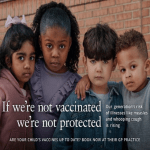
A survey from the UKHSA, shared in March 2024, reveals that “most” parents in England have a “positive view” of the childhood immunisation programme and consider healthcare professionals the most trusted source of information. The 2023 annual parental attitudinal survey shows that 89% of parents agree that vaccines work, with 84% agreeing that they are safe and 82% agreeing that they are trusted. The online survey was open to parents of children between the ages of 2 months and 5 years and was conducted by the commercial research organisation BASIS.
Survey findings
Around 1,000 respondents had a child aged between 2 months and 3 years, 4 months, and 1,000 respondents had a child aged 3 years, 4 months to less than 5 years. The most frequently recalled health issue that parents had seen or heard about in the past 12 months was respiratory syncytial virus (RSV), followed by ‘healthy eating’ (37%). Vaccines, apart from the COVID-19 vaccines, were “spontaneously” recalled by 34% of parents. However, when prompted, 73% of parents reported having seen or heard something about vaccines (including COVID-19 vaccines) for children in the previous 12 months.
Serious diseases
The diseases that parents were most concerned about were rated “very serious”; these were septicaemia (86%) and meningitis (81%). RSV was rated as “very serious” by 58% of parents to babies and younger children, which was higher than in parents of slightly older children. Flu was perceived as less serious, with only 19% of all parents rating it as “very serious”.
Vaccine safety and confidence
A total of 88% of parents were happy with the safety of vaccines offered to babies and young children. However, this is a reduction from the 2022 survey, which found 92% happy.
“Parents in social grade C2DE and ethnic minorities were more likely to report feeling less happy with the safety of vaccines for babies and young children.”
The survey found that 89% of parents agreed that vaccines work, that they are safe (84%), and trusted (82%). Although UKHSA recognises that these are “high”, the levels are again lower than the 2022 survey.
Information sources
77% of parents reported seeing or hearing information about vaccines for babies and young children from “approved” sources such as healthcare professionals, the NHS website or leaflets, or the child’s personal health record (known as the Red Book). Of the 67% of parents who reported seeing vaccine information online, almost a third of them had seen it on the NHS website and 18% on parenting websites like Mumsnet.
Facebook was the most commonly reported social media source (24% of parents who had seen information online). Instagram, Twitter, and Snapchat were also cited as sources. Women were “more likely than men” to see or hear about vaccines through healthcare professionals and men were “more likely” to have heard about vaccines for their child through social media/online, or through friends and family.
72% of parents who had seen or heard something about vaccines in the last 12 months reported that the information had been in favour of vaccines. Again, this was lower than the 2022 survey (80%). 59% of parents had not seen or heard anything that would cause concern about any childhood vaccines.
When respondents were asked to rank different sources of information:
- 86% ranked the NHS in 1st-3rd place
- 85% ranked health professionals (like a GP, practice nurse, midwife, or health visitor) in 1st-3rd place
- 66% ranked pharmacists in 1st-3rd place
- Only 10% ranked the internet in 1st-3rd place
- Only 5% ranked social media in 1st-3rd place
Vaccine conversations
86% of all parents felt they had received enough information to make an “informed decision” about the vaccines offered to their children. This was higher than the 81% of parents who reported this in the 2022 survey. 86% of parents of younger children reported that they had an opportunity to discuss childhood vaccination with a health professional before their child’s first vaccines; 18% reported a discussion before the baby was born; 46% had the discussion soon after birth, and the rest had the discussion at the vaccination visit (22%).
Health visitors (56%) and midwives (43%) were the health professionals most commonly reported as having vaccine discussions with parents. 83% of parents had already decided that their babies would have all the vaccines offered before they had a discussion. 14% who had not made up their minds decided in favour of vaccination after the discussion.
“Ethnic minorities, men, and younger parents were more likely to have changed their mind and decided to have their baby vaccinated after speaking to a healthcare professional.”
Around 80% of parents were either satisfied or very satisfied with their most recent vaccine experiences.
Parents have confidence
Dr Mary Ramsay, Head of Immunisation at UKHSA, commented on the results.
“The recent survey shows that most parents have confidence and trust in the NHS childhood vaccination programme and it’s reassuring to see that 86% of parents say that NHS resources and healthcare professionals are their most trusted sources for information.”
While Dr Ramsay emphasised that “it’s completely natural” for parents to have questions, the survey highlights “just how important healthcare professionals are in ensuring parents get to know the facts”. She urged parents to “speak to their GP, midwife, health visitor, or other trusted healthcare worker or visit nhs.uk for the latest advice and answers to common questions.”
“All parents want to do the best for their children – ensuring your child receives all their vaccines on time is one of the most important things you can do to help give them the very best start in life.”
Steve Russell, NHS Director of Vaccinations and Screening, stated that “vaccination is one of the most important tools to save lives and prevent disease”, so it’s “great” to see that the NHS is the “source most people trust”.
“It is never too late to have this conversation to help you and your family make an informed choice. Anybody who wants to discuss what vaccinations they are eligible for should contact their GP practice.”
For more on the importance of trust in ensuring uptake of routine immunisation programmes, join us at the Congress in Washington this April or subscribe to our newsletters here.