
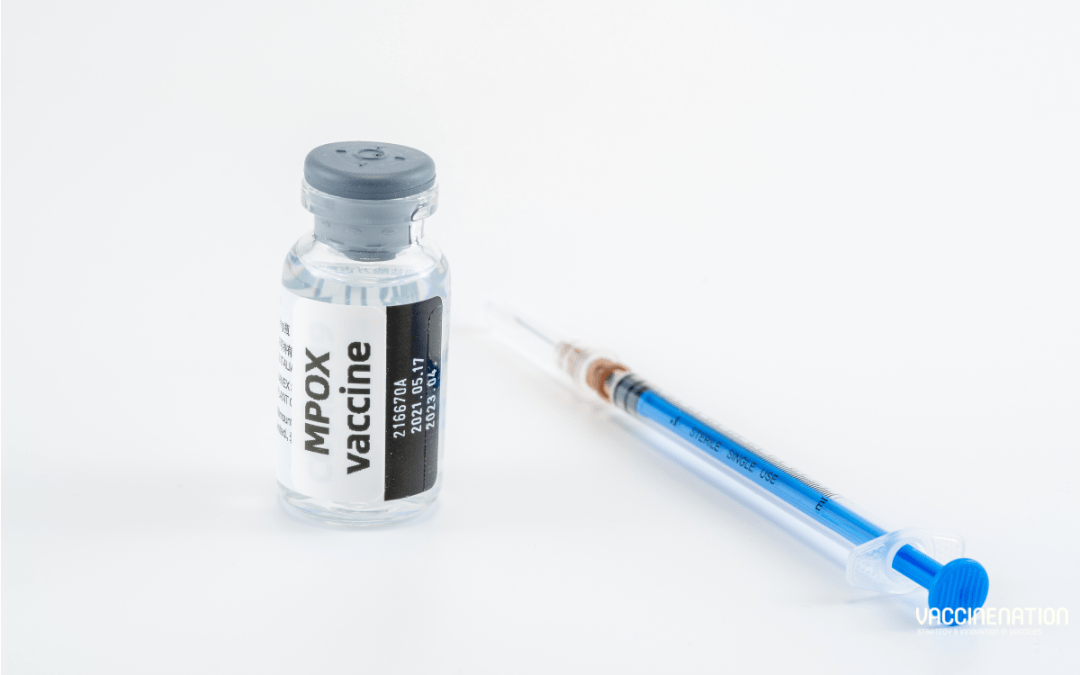
CEPI announced in July 2024 that a clinical trial to assess if an mpox vaccine can protect against mpox after contact with the infection has received US$4.9 million from CEPI and the Canadian Institutes of Health Research. The ‘SMART’ trial will launch in the Democratic Republic of Congo (DRC) as well as Nigeria and Uganda. It will test if post-exposure vaccination with Bavarian Nordic’s MVA-BN mpox vaccine can reduce the risk of secondary mpox cases and explore whether it can reduce the severity of illness after infection.
A “large and deadly outbreak”
CEPI states that this trial could be “crucial” in shaping mpox vaccination strategies to address a “large and deadly outbreak” that has been escalating in the DRC and neighbouring countries. In 2024 over 11,000 cases and 443 deaths have been reported from DRC, with children accounting for most infections and deaths. The mpox strain causing the current outbreak is Clade I, estimated to be fatal in between 8% and 12% of cases and spread through direct contact. However, concern is also increasing at the emergence of Clade Ib in eastern regions, such as Kamituga and South Kivu. This appears to be spread through sexual transmission and skin-to-skin contact.
The study
The ‘SMART’ (Smallpox vaccine for Mpox post-exposure prophylaxis: A cluster Randomised controlled Trial) study will be led by Professor of Pathology and Molecular Medicine at McMaster University, Canada, Mark Loeb. It will involve over 1,500 participants aged 10 and over from households with laboratory-confirmed mpox infection. It will take place at sites in the DRC, Uganda, and Nigeria, and is set to launch in August.
Participants will be randomly allocated to receive a dose of MVA-BN or a control vaccine. Four weeks after allocation, scientists will compare the number of participants who contract mpox in each group and assess the severity of symptoms. This trial is the first randomised trial to assess the potential to vaccinate high-risk individuals post mpox exposure with this vaccine. Previous research identified a “substantially lower” risk of death for people vaccinated after exposure to the Ebola virus in DRC.
Professor Loeb describes the research as of “paramount importance”.
“It needs to be address with the utmost urgency.”
Dr Richard Hatchett, CEPI’s CEO, looks forward to “important real-world data in local populations, including older children”, which could be “key to informing mpox vaccine use recommendations” and help “bring an end to this devastating outbreak”.
“While healthcare workers typically vaccinate somebody before they are at risk of an infection, post-exposure-vaccinations allow for a more targeted approach, minimising use of vaccine supply. Here, individuals in high-risk groups – such as household contacts of an index case – are vaccinated to potentially reduce the risk of infection, improve survival odds, and stop onward chains of transmission.”
SMART design
Dr Patrick de Marie Katoto, Deputy Director of the Centre for Tropical Diseases and Global Health and Associated Professor of Clinical Epidemiology and Global Health Infection at the Catholic University of Bukavu in DRC stated that “SMART is so smart”.
“This project is not just intelligent because of its acronym but also because of its strategic and impactful approach to guiding public health interventions during crises. Assessing both the safety and efficacy of mpox vaccine in post-exposure scenarios will not only fill the current knowledge gap but also guide response strategies to save lives by protecting at-risk populations and preventing the spread.”
Dr Marisa Creatore, Executive Director of the Canadian Institutes of Health Research (CIHR) Centre for Research on Pandemic Preparedness and Health Emergencies is pleased to collaborate with CEPI in support of the “important” trial, which brings researchers together “for a common goal”.
“Viruses of zoonotic origins – mpox being one of many – are an increasing global health concern and we are happy to be able to contribute to the development of new public health tools to address these concerns.”
Bavarian Nordic’s President and Chief Executive Officer, Paul Chaplin, is “very proud” that the mpox vaccine will be used in the trial.
“Our company is firmly committed to working with the local authorities to develop solutions for vulnerable populations to combat the ongoing mpox outbreak in the DR Congo and other countries.”
For more insights into important vaccine trials and efforts to address infectious disease threats, why not join us at the Congress in Barcelona this October, or subscribe to our weekly newsletters here?


