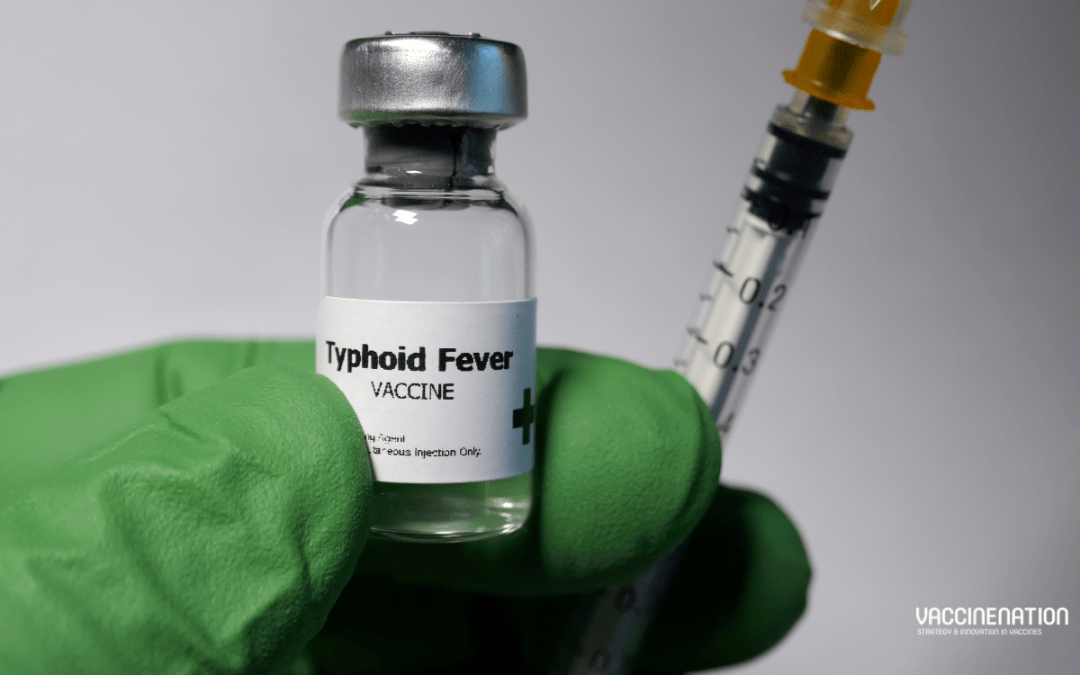
A study in The Lancet in October 2024 finds that a single dose of typhoid conjugate vaccine (TCV) offers safe and effective protection against typhoid two years after vaccination in all children and sustained protection for older children at three to five years after vaccination. However, a “decline” in protection was observed after this period, with the greatest decline identified in children vaccinated at younger ages. The authors infer that a booster dose of TCV, perhaps around school entry age, might be needed for children vaccinated while younger than two years old, to sustain protection through the years when the risk is highest.
TCV
Typhoid fever places a “substantial disease burden” on low- and middle-income countries “marked by inadequate sanitation and limited access to clean water”. There are an estimated 7.15 million cases and 93,300 deaths each year. This burden is exacerbated by the “escalation” of antimicrobial resistance (AMR), which reduces treatment options. WHO recommends vaccines as an “important tool” in typhoid prevention and control strategies.
The first typhoid conjugate vaccine (TCV) was prequalified by WHO in 2017 based on field safety and immunogenicity data and findings from a controlled human infection model. 2-year vaccine efficacy has since been confirmed at 79-85% in randomised control trials. Research has revealed a “consistent trend” of waning protection in children vaccinated at a young age. Although WHO’s current recommendation is a single dose for infants and children from 6 months of age, epidemiological studies in countries across Asia and Africa suggest that incidence peaks in children between the ages of 5 and 9 years. Therefore, the authors identified a need to understand if a single dose of TCV can provide “substantial protection” in the medium and long term, or if a booster dose is needed.
Expanding the TyVAC trial: TyVOID
The cluster-randomise controlled trial (TyVAC) to assess the safety, immunogenicity, and protection conferred by a single dose of TCV started in Bangladesh in 2018 with a follow-up to 18 months. To generate further data, the authors extended this to evaluate vaccine protection and immunogenicity at 3-5 years after vaccination.
In TyVAC, healthy children aged 9 months to 15 years were offered TCV or a Japanese encephalitis vaccine according to their cluster of randomisation. 150 clusters were randomised to either TCV or the Japanese encephalitis vaccine, with 75 in each group. After a 3-month passive surveillance period, the baseline of TyVOID began at the final visit of TyVAC. Vaccinated children visited study clinics; after unmasking, participants in the Japanese encephalitis group were offered vaccination with a single dose of TCV, but TCV recipients were not offered the Japanese encephalitis vaccine.
Two cohorts of TCV-vaccinated children were available for follow-up:
- The group vaccinated in the original study between April 2018 and November 2019 (previous-TCV group)
- The group originally vaccinated with Japanese encephalitis and later TCV between January and August 2021 (recent-TCV group)
Results
During a median of 2.4 years, 14 episodes of typhoid fever were detected in the recent-TCV group (incidence rates of 31 per 100,000) and 45 episodes among the previous-TCV group (incidence rates of 97 per 100,000). The “significantly higher” incidence of typhoid fever in the previous-TCV group indicates a “drop in the vaccine effectiveness” 3-5 years after vaccination. The waning of vaccine effectiveness was further confirmed through the inclusion of unvaccinated children who sought care for fever as the reference group.
The decline in vaccine effectiveness correlated with age at vaccination; children in the youngest age group exhibited the most substantial reduction in vaccine effectiveness. The reason for the age-specific difference is “unclear”, but the authors suggest that underdeveloped bone marrow in younger children results in a weaker ability to support long-lived plasma cells. Another possibility is that older children have more opportunities for exposure to S Typhi than younger children, contributing to a greater durability of antibody concentrations after vaccination.
The issue of exposure is also relevant in comparing this study to a study in Malawi, as the incidence of typhoid fever in Bangladesh was “approximately three times higher”, with greatest disparity in younger children. Therefore, while a single dose of TCV might remain “highly effective” in Malawian children, it ceases to confer sufficient protection in Bangladeshi children.
“Put simply, it may be that more antibody is needed in Bangladesh to protect against typhoid fever than in Malawi as the incidence of infection is likely to be higher in Bangladesh.”
Implications
The introduction of TCV as a catch-up campaign in several countries is “likely to have a substantial impact” on the typhoid burden in these countries. TCV will then be integrated into local EPI programmes with a single dose, focussing on infants and toddlers. However, the authors urge WHO to evaluate their data and consider the “potential need for a booster around school entry age”.
Associate Professor Xinxue Liu of the Oxford Vaccine Group is one of the senior authors and emphasised how “serious and life-threatening” the disease is, particularly for “children and adolescents in low- and middle-income countries”.
“TCV offers the best chance to reduce the burden of typhoid, helping to reduce transmission and limiting further evolution of drug-resistant strains. This study provides additional information for policy makers on longer-term TCV protection and the importance of continued investigation and updated guidance.”
Dr Firdausi Qadri, Senior Scientist at the Infectious Diseases Division at the International Centre for Diarrhoeal Disease Research, Bangladesh (icddr,b) and first author, commented that the results “indicate a decay in antibody concentrations in different age groups”.
“[They] suggest that a booster dose around school entry age for children vaccinated while younger than 2 years could be considered, to sustain the protection from TCV through the school years when children are at greatest risk of typhoid.”
Professor Sir Andrew Pollard, Director of the Oxford Vaccine Group, reflected on WHO’s “current” recommendation.
“Epidemiological studies in different countries across Asia and Africa showed that the incidence of typhoid fever is much higher in children younger than 16 years than it is in adults, with the peak of cases seen in those aged 5-9 years. Whether a single dose of TCV provides long-term protection continues to be a top research priority to advise policy makers.”
For the latest vaccine research updates, why not subscribe to our weekly newsletters here? We hope you will also join us at the Congress in Barcelona this month to discuss vaccine questions and explore global health concerns.