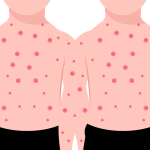
A study from the Annenberg Public Policy Centre (APPC) in June 2024 reveals that a quarter of US adults are unaware that “claims that the MMR vaccine causes autism are false”. Despite CDC assurance that there is no evidence linking the vaccine to autism, 24% of US adults reject this, with another 3% not sure. The association was falsely asserted in a 1998 paper that has since been retracted. The survey, conducted between 18th and 24th April 2024, questioned over 1,500 US adults about their knowledge of how a person can contract measles, its symptoms, and whether medical professionals recommend the measles vaccine for pregnant people.
Survey findings
APPC suggests that “a majority” of survey respondents know how measles can and cannot be spread; nearly 6 in 10 correctly said that measles can be spread through coughing and sneezing and by touching a contaminated surface before touching one’s nose, mouth, or eyes. Although measles cannot be spread through unprotected sexual contact with an infected person, over a fifth of people surveyed (22%) thought this was a way of catching the virus.
“Very few” survey respondents knew how long a person who is infected with measles can spread the virus before developing the “signature” rash. Just over 1 in 10 (12%) correctly estimated that a person can spread the infection for four days before developing a rash, while 12% estimated that the period is one week. 55% were not sure.
The survey also asked respondents to select whether a series of possible complications were associated with having measles while pregnant. Fewer than 4 in 10 people correctly identified two complications associated with contracting measles while pregnant: delivering a low-birth-weight baby (38%) and early delivery (37%). Smaller numbers of people incorrectly indicated that diabetes (7%), blurred vision (11%), and death (12%) are more likely to occur if you have measles while pregnant. APPC emphasises that “they are not”.
Most people (57%) were unsure whether pregnant people should get vaccinated against measles if they have not already been vaccinated against it. Only 12% knew that medical professionals do not recommend the vaccine for pregnant individuals, because the vaccine uses a live attenuated form of the virus.
Dr Kathleen Hall Jamieson, director of the Annenberg Public Policy Centre, commented that the “persistent false belief that the MMR vaccine causes autism” is still “problematic”, particularly “in light of the recent increase in measles cases”.
“Our studies on vaccination consistently show that the belief that the MMR vaccine causes autism is associated not simply with reluctance to take the measles vaccine but with vaccine hesitancy in general.”
To explore key reasons for decreasing vaccine uptake and increasing measles cases why not join us in Barcelona for the Congress this October, or subscribe to our weekly newsletters here?