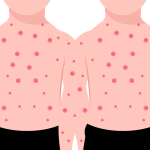
At WHO South-East Asia Regional Director Saima Wazed’s inaugural address to the 15th Meeting of the WHO South-East Asia Regional Immunisation Technical Advisory Group (SEAR-ITAG) she called on countries to aim for a “big catch-up” of vaccinations in children. Ms Wazed highlighted the need to vaccinate all zero dose and partially vaccinated children, restore immunisation progress that was “lost during the pandemic”, protect all adolescent girls from cervical cancer, and accelerate efforts to eliminate measles and rubella from the region by 2026. The SEAR-ITAG, in New Delhi from 20th-23rd August, provides guidance on regional immunisation priorities and technical support for strengthening immunisation services. The Meeting also presents an opportunity to celebrate 50 years of the expanded immunisation programme.
Progress over 50 years
Regional Director Wazed said “proudly” that the last 50 years of immunisation programmes have “helped hundreds of millions of people in our Region live healthier, longer, more productive, and prosperous lives”.
“Today, South-East Asia Region continues to be free of wild polio virus transmission and has maintained elimination of maternal and neonatal tetanus as a public health problem. Five countries have eliminated measles and rubella, and six have controlled hepatitis B through immunisation. Seven countries consistently reach over 90% of children with three doses of diphtheria, pertussis, and tetanus (DTP3) vaccines.”
Despite this progress, the Region missed its target of eliminating measles and rubella by 2023. WHO/UNICEF Estimates of National Immunisation Coverage data identified “slow progress and no meaningful change” to childhood immunisation coverage compared to 2022. Furthermore, coverage is still not restored to pre-pandemic 2019 levels. Almost 2.7 million children in the Region did not receive any vaccine and a further 0.6 million children were “partially vaccinated” in 2023.
“We need to understand where and why these children were missed and prioritise reaching them as soon as possible. No child should ever fall sick or die of any vaccine preventable disease, when safe and effective vaccines exist to protect them.”
The slow progress of post-pandemic recovery reveals a need for innovation, locally effective approaches, and enhanced political and social leadership.
Priorities
A priority in the Regional Director’s Roadmap for Results and Resilience is “reaffirming investment in women, girls, adolescents, and vulnerable populations”. To this end, Ms Wazed highlights the need to ensure all adolescent girls in the Region are protected and get “at least one dose” of HPV vaccine to protect from cervical cancer. Central to these efforts will be “revitalising immunisation programmes, strengthening community-centred health systems, ensuring vaccines supply, and boosting demand through community engagement”. Policy and resources must “urgently” prioritise routine immunisation, particularly for measles.
“The focus must be on tailored approaches, identified in consultation with the affected communities. No matter how challenging or remote the setting is, we will need to find new ways to reach the children most at risk of life-threatening diseases and protect them with vaccines.”
For more on global vaccine priorities and efforts to reach under immunised groups, get your tickets to join us at the Congress in Barcelona this October, and don’t forget to subscribe to our weekly newsletters here.