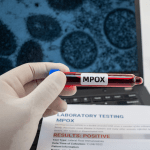
In August 2024 WHO launched a Global Strategic Preparedness and Response Plan (SPRP) to address the mpox public health emergency of international concern (PHEIC), declared on 14th August. The plan, subject to input from Member States, is intended to stop outbreaks of human-to-human transmission of mpox through “coordinated global, regional, and national efforts”. It covers the period September 2024 to February 2025 and is expected to involve a US$135 million funding need; WHO will follow with a funding appeal.
Outbreaks can be controlled
In the foreword, WHO Director-General Dr Tedros Adhanom Ghebreyesus states that the new mpox outbreaks “can be controlled” through “connected action”. The plan provides a “comprehensive approach” and emphasises “surveillance, research, equitable access to medical countermeasures, and community empowerment”.
“Our approach must uphold the principles of equity, global solidarity, community empowerment, human rights, and cross-sector coordination.”
Dr Tedros urges countries to use the plan to “guide their efforts” against the outbreak and “protecting the health and dignity of all”. The Executive Summary describes the need for “substantial resources” and “operational support” and calls for an estimated budget of US$135 million, excluding the cost of procuring around 2 million vaccine doses.
Temporary recommendations
In response to the “escalating” outbreak of different strains of mpox, a Public Health Emergency of International Concern (PHEIC) was declared on 14th August 2024.
“This declaration underscores the severity of the current situation and highlights the urgent need for intensified international collaboration to control the outbreak.”
The existing Standing Recommendations for mpox, issued in August 2023, were set to expire on 20th August 2024. However, the Emergency Committee proposed new Temporary Recommendations in the following areas:
- Strengthened coordination
- Enhanced surveillance and laboratory diagnostics
- Improved clinical care
- International traffic
- Vaccination
- Risk communication and community engagement
- Governance and financing
- Reporting
Strategic objectives
The mpox SPRP is intended to stop outbreaks of human-to-human transmission of mpox and “mitigate its impact on human health”. To achieve this, it sets out three strategic objectives:
- Rapidly detect and control outbreaks
- Advance research and ensure equitable access to medical countermeasures
- Minimise transmission between humans and animals
Vaccines to interrupt transmission
“Enhancing control strategies through strategic vaccination is crucial. Implementing targeted vaccination approaches can help reduce the spread of the virus by focusing on those at the highest risk of infection, thereby reducing overall transmission.”
The vaccination strategy prioritises individuals who are at “substantially higher risk of exposure”. Key considerations include:
- Access and delivery – the plan highlights an “urgent need” to increase access to and delivery of mpox vaccines, particularly in areas with active cases. WHO encourages countries with vaccine stockpiles to make doses available to affected regions and manufacturers to review access and pricing policies to ensure vaccines are affordable and accessible in low- and middle-income countries.
- Security and community engagement – effective strategies should consider the security challenges faced by vaccination teams and communities, especially in areas with “complex socio-political factors and ongoing conflicts”. WHO demands “strong community engagement and risk communication efforts”.
The plan proposes a phased vaccination strategy:
- Phase 1: Stop outbreaks. This phase is intended to interrupt known chains of transmission by targeting contacts of incident cases with onset in the previous 2-4 weeks and healthcare workers/frontline workers (HCWs/FLWs) in areas with active cases. This is a targeted approach that focuses on individuals most likely to transmit disease and uses fewer resources to efficiently reduce transmission by breaking chains of infection.
- Phase 2: Expand protection. This phase seeks to limit further spread in affected communities if additional doses are available. It targets individuals at high risk of severe disease – based on local epidemiology – in affected areas. This approach aims to provide broader community protection but does require additional doses, resources, and logistics.
- Phase 3: Protect for the future. The final phase focuses on increasing population immunity in areas at risk of outbreak expansion of future outbreaks. It targets all populations recommended by the Strategic Advisory Group of Experts on Immunisation (SAGE) as more doses become available. The goal is to achieve herd immunity to provide community-wide protection. Although it is resource-intensive, it is effective in reducing overall transmission.
The phased approach ensure that vaccination efforts are “prioritised and tailored to stopping the outbreak, guided by improved surveillance data, with the flexibility to scale up as vaccine availability increases”. The SPRP focuses on Phase 1 of the strategy.
The vaccine landscape
The SPRP presents a brief review of potential vaccine candidates under consideration:
- MVA-BN – A non-replicating vaccine, indicated for smallpox, and authorised in several countries for mpox prevention.
- LC16m8 – A minimally replicating vaccine, authorised in Japan for smallpox and mpox prevention.
- ACAM2000 – A replicating vaccine indicated for smallpox, with emergency use authorisation for mpox in the US.
Vaccines in preclinical studies include BNT166a and BNT166c; these are next-generation mRNA vaccines designed to provide “broad protection” against MPXV and related orthopoxviruses. These are showing “promising” preclinical results and research is focused on evaluating their efficacy and safety in “diverse groups”.
“The current outbreak presents an opportunity to evaluate new vaccines, which, if proven effective and safe, could expand vaccination efforts and help control the outbreak.”
Scale up of global production and distribution is “vital” to meet demand, particularly in low- and middle-income countries. Furthermore, accelerating regulatory evaluations for new and existing vaccines is “essential” to ensure availability.
For insights into a novel mpox vaccine from Tonix Pharma, join us at the Congress in Barcelona this October, or get your tickets to the Congress in Washington next April for more on mpox preparedness and response; don’t forget to subscribe to our weekly newsletters here.