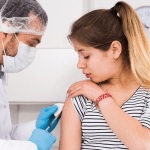
In March 2024 the Gates Foundation announced a collection of “major new policy, programmatic, and financial commitments” to contribute to efforts to eliminate cervical cancer. These commitments include almost $600 million in funding and were made at the first Global Cervical Cancer Elimination Forum: Advancing the Call to Action in Cartagena de Indias, Colombia. The Foundation states that a woman dies from cervical cancer every two minutes, despite the knowledge and tools to “prevent and even eliminate” the disease. Vaccination against human papillomavirus (HPV), which is the leading cause of cervical cancer, can prevent most cases.
The Gates Foundation statement acknowledges “many challenges on the path to elimination”. A combination of “supply constraints, delivery challenges, and the COVID-19 pandemic” meant that only 1 in 5 eligible adolescent girls were vaccinated in 2022. Furthermore, while cost-effective and evidence-based tools for screening and treatment exist, under 5% of women in many LMICs are screened for cervical cancer. These barriers cause “deep inequity”; over 90% of cervical cancer deaths in 2022 happened in LMICs.
The first global forum
In 2022, WHO’s global recommendation for one-dose HPV vaccine schedules “significantly reduced barriers” to scaling up vaccination programmes, a move that was reinforced by the America’s Region in 2023 and the Regional Office for Africa in 2024. However, the latest commitments “mark a watershed moment” to accelerate progress to eliminate cervical cancer.
Dr Tedros Adhanom Ghebreyesus, WHO Director-General, commented that “vaccination, screening, and treatment programmes are still not reaching the scale required”, even though we “have the knowledge and tools to make cervical cancer history”.
“This first global forum is an important opportunity for governments and partners to invest in the global elimination strategy and address the inequities that deny women and girls access to the life-saving tools they need.”
Country level commitments
Indonesia made a “re-commitment” to its National Action Plan 2023. Further commitments include:
- Democratic Republic of Congo commits to start introducing the HPV vaccine as early as possible with the WHO-recommended single-dose schedule and to do everything to get to the cervical cancer elimination strategy immunisation coverage target for girls aged 9 to 14 years as soon as possible.
- Ethiopia commits to implement a robust vaccine delivery strategy across the country, targeting at least 95% coverage in 2024 for all 14-year-old girls, regardless of their socioeconomic and education status, and to screen 1 million eligible women every year and to treat 90% of those who present with positive precancerous lesions. HPV single dose has been approved for introduction this year and scale up within the country’s Expanded Programme on Immunisation plans.
- Nigeria launched its HPV vaccine national programme this year, adopting the single-dose schedule for girls aged 9 to 14 and now commits to achieving at least 80% vaccine coverage of girls and continuing to increase coverage through a robust delivery strategy that will meet girls where they are, whether in school or not.
Experts weigh in
Quoted are several public health and development leaders, including Dr Chris Elias, President, Global Development at the Gates Foundation, who described HPV vaccines as a “miracle of modern medicine”. However, “too many” in LMICs do not have access to them.
“There is no reason why women should die from cervical cancer when a vaccine to prevent it exists…cervical cancer elimination is within reach. Now is the time for governments and partners around the world to increase HPV vaccine access and protect future generations from cervical cancer.”
Aurélia Nguyen, Gavi’s Chief Programme Officer, believes the HPV vaccine is “one of the most impactful vaccines on the planet” and has “already helped save thousands of lives”. Gavi is committed to supporting efforts to vaccinate 86 million adolescent girls by 2025.
“With bold commitment and decisive action, we can look forward to a future where cervical cancer has been eliminated for good.”
Juan Pablo Uribe, Director of the Global Financing Facility for Women, Children, and Adolescents (GFF) and Global Director for Health Nutrition and Population at the World Bank, emphasises the World Bank and the GFF are “doubling down efforts for cervical cancer elimination”.
“Every woman and every girl should have access to cervical cancer prevention, screening, and treatment as part of regular health care services. Much more work is ahead of all of us with a shared goal: eliminate cervical cancer. We need to build on today’s momentum and support countries’ leadership to accelerate progress.”
Director of PAHO, Dr Jarbas Barbosa, identifies an “urgent need” to scale up access and coverage for vaccination, screening, and treatment”
“I express PAHO’s profound commitment to elevate the political will and prioritise cervical cancer elimination in the public health agenda of countries in the Americas.”
Helga Fogstad, UNICEF Director of Health, sees the “end of an entire category of cancer” in sight for the first time.
“With the necessary tools at our disposal, commitment and political will are the next critical steps to a future free of cervical cancer for generations to come.”
UNITAID’s Executive Board Chair, Marisol Touraine, “cannot accept that women die from cervical cancer, when we know how to prevent and treat this disease”.
“At this pivotal moment, we must ensure the efficient tools we have are both affordable and available to every woman and girl in need…Together with our partners, we will continue to lay the groundwork for a future where all women have equitable access to the care they deserve, regardless of their socio-economic status or geographic location.”
Dr Atul Gawande, Assistant Administrator for Global Health at the US Agency for International Development, reflected that the “powerful shield” of the vaccine, regular screening, and early treatment will enable us to “safeguard a generation from the devastating effects of cervical cancer”.
“Every shot is a bold stride towards a future where cervical cancer is eliminated…Together we’re forging a path towards a future where cervical cancer is no longer a threat to the health and wellbeing of women worldwide.”
We’re looking forward to exploring some of the key challenges and opportunities in the WHO Cervical Cancer Elimination Goal during the HPV workshop at the Congress in Washington, so do get tickets to join us there at this link, and don’t forget to subscribe for more insights here.