by Charlotte Kilpatrick | Oct 18, 2024 | Technology |
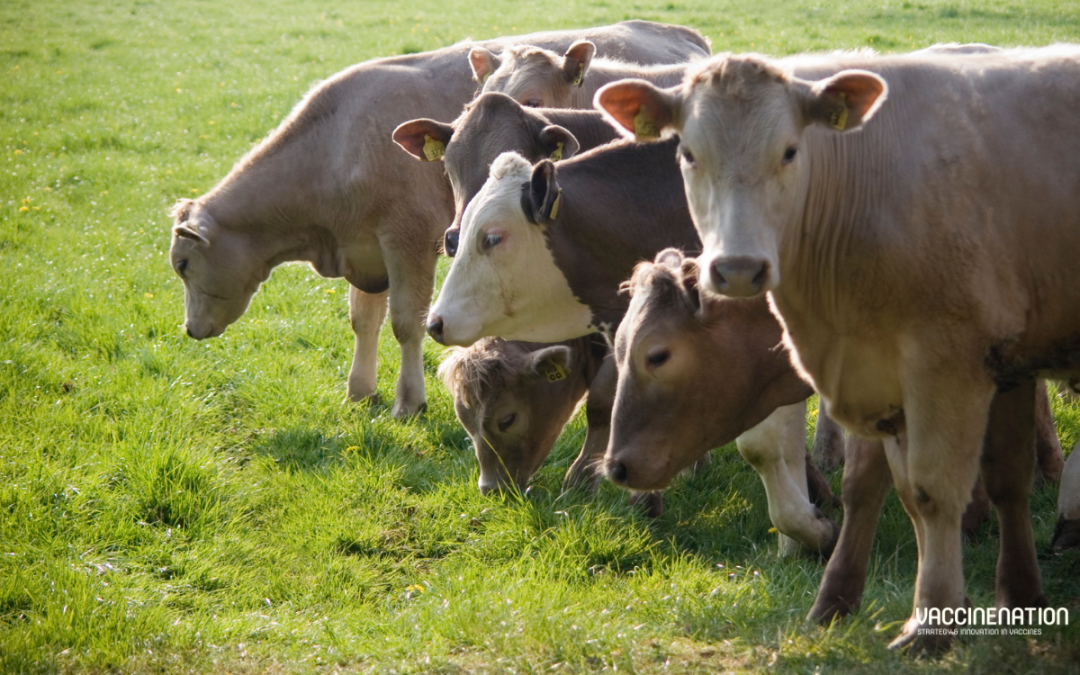
In October 2024 the Animal and Plant Health Agency (APHA) and The Vaccine Group (TVG) announced that Innovate UK has awarded them a Smart grant in excess of £400,000 to advance a novel viral vector platform. In a project lasting 19 months, the two organisations will use technology developed by TVG scientists in candidate vaccines for two “important diseases in cattle”: bovine respiratory syncytial virus (BRSV) and lumpy skin disease (LSD). The project will continue previous research, which identified potential vaccine candidates; it is supported by the World Reference Laboratory for Non-Vesicular Diseases at The Pirbright Institute, determining how the candidates can produce an adequate serological response in animals and protect cattle.
BRSV and LSD
Bovine respiratory syncytial virus (BRSV) is the leading viral cause of respiratory illness in young calves in the UK. It affects around 1.9 million calves each year, costing approximately £54 million. It is “prevalent worldwide” and poses a “substantial economic burden” on beef and dairy producers. In the past 10 years, lumpy skin disease (LSD) has spread “dramatically” beyond former natural enzootic geographies in Africa and the Middle East to cause “severe disease” in other regions.
Both diseases have “broad global prevalence”, and BRSV particularly affects intensively reared cattle. Currently available commercial vaccines for BRSV do not prevent shedding and are restricted from use in young calves by maternal immunity. There are no DIVA (differentiating infected from vaccinated animals) vaccines available for LSD, so use is limited to areas where serosurveillance and eradication programmes are in place.
TVG’s vaccine solutions
The Vaccine Group (TVG) hope to address these challenges. With “key opinion leaders” for the two diseases in the UK and Canada, TVG has inserted transgenes for protective antigens from each virus into two separate constructs through genetic manipulation. Both vaccine candidates have been shown to be genetically stable and have demonstrated “stable and prolonged” protein expression in tissue culture over multiple passages. The technology works by introducing a benign virus to cattle, which stimulates the expression of proteins to induce an immune response.
Chief Executive Officer at TVG, Dr Jeremy Salt, reflected that infectious diseases are a “major cause for concern” for cattle farmers around the world, leading to “significant losses – both in terms of animal health and welfare, and in financial terms”.
“Our goal in developing a viral vector platform for use in cattle effective vaccines is to overcome some of the deficiencies that affect the current commercialised vaccines. By doing so, we can better protect the farmers, their animals, and their livelihoods.”
Dr Salt also hopes to “make beef and milk production more efficient, humane, and sustainable”, whilst “helping the sector address the global challenges of antibiotic resistance and carbon emissions”.
We look forward to hearing from Dr Salt at the Congress in Barcelona in just a few weeks; get your tickets to join us there and don’t forget to subscribe to our weekly newsletters here.
by Charlotte Kilpatrick | Oct 10, 2024 | Infection |
In October 2024, the United States CDC reported a third human case of H5 bird flu in the state of California. This announcement followed the identification of two human cases just a week before. All three cases have reported occupational exposure to infected dairy cows, but none has been hospitalised. The CDC risk assessment for the public remains “low”.
Three cases reported
The first two human cases were reported on 3rd October 2024 in people with occupational exposure to infected dairy cows. H5N1 outbreaks in dairy herds were first reported in California in August 2024. The cases had no known link or contact, indicating separate instances of animal-to-human spread. Sequences from these cases confirmed clade 2.3.4.4b A(H5N1) viruses, closely related to viruses detected in dairy cattle. Whole genome sequencing from one of the cases confirmed a B3.13 genotype virus.
“There were no genetic changes observed that are known to be associated with an increased ability to infect or spread between people or known to reduce susceptibility to antiviral medications.”
The third case, reported on 9th October 2024, also reported occupational exposure and no known contact with the other cases. Sequencing of this case is underway. The infected people experienced “mild” symptoms, including conjunctivitis. None of the three cases has been hospitalised.
The broader risk
CDC’s risk assessment for the general public is still “low”. This case takes to total human cases of H5 bird flu to 17 in 2024. Cases have been reported in Texas (1), Michigan (2), Colorado (10), Missouri (1), and California (3). Only one case, in Missouri, has not had source confirmation. The agency emphasises the importance of recommended precautions for people with exposure to infected or potentially infected animals.
At the Congress in Barcelona this month we will explore avian influenza during the One Health and Veterinary track, considering the role of vaccination in One Health strategies and learning from our experts’ experiences. Get your tickets to join us there and don’t forget to subscribe to our weekly newsletters for more health news.
by Charlotte Kilpatrick | Sep 25, 2024 | Technology |
MSD Animal Health announced in September 2024 that it is expanding the newly USDA-approved NOBIVAC NXT vaccine platform to include a best-in-class solution to protect cats against a common feline infectious disease, feline leukaemia virus (FeLV). Describing this technology as a “breakthrough scientific achievement”, MSD Animal Health indicated that the vaccine is expected to be available at veterinary clinics and hospitals in the autumn.
NOBIVAC NXT
The NOBIVAC platform is behind a portfolio of products with an “extensive range of vaccines” to protect companion animals against various diseases. NOBIVAC NXT FeLV is the first and only feline leukaemia virus vaccine built using the RNA-particle technology platform. It is designed to deliver “optimised protection”. It is a nonadjuvanted, low volume 0.5 mL dose vaccine that “harnesses the natural ability of the immune system” to generate a robust response.
NOBIVAC NXT FeLV is labelled effective against persistent viraemia and is indicated for the vaccination of cats aged 8 weeks or older. The American Association of Feline Practitioners (AAFP) recommends administration in two doses, 3 to 4 weeks apart. It follows the AAFP’s recommendations for extended duration protection with a proven 2-year duration of immunity (DOI).
Feline leukaemia virus
Feline leukaemia virus can be spread in a “multitude of ways”, including mutual grooming, fighting behaviour, or shared food. It poses “serious” health risks, but cats often show no symptoms when they are first infected. However, as it persists, the virus can lead to cancer, severe blood disorders, or other infections associated with a compromised immune system. Routine vaccination can help protect from potential illness.
Meg Conlon, DVM, executive director, veterinary professional services, MSD Animal Health, suggested that “nearly 4% of cats” in North America are affected by the disease. This is a “notable percentage when there have been guidelines for prevention in place for decades”.
“That’s why education and awareness of the importance of vaccinating against this disease is so important.”
Ian Tarpey, vice president, research and development, MSD Animal Health, is proud to extend the RNA-particle technology with a vaccine that “protects against one of the most persistent threats to our feline patients”.
“MSD Animal Health and our NOBIVAC brand have a rich history in vaccine innovation, and we’re continuing to prove our dedication to ensuring there are safe and effective treatment options for veterinary professionals with the latest development of NOBIVAC NXT FeLV.”
For the latest on veterinary vaccines at the Congress in Barcelona next month, get your tickets to join us here and don’t forget to subscribe to our weekly newsletters here.
by Charlotte Kilpatrick | Sep 9, 2024 | Global Health |
The UK Department for Environment, Food, and Rural Affairs (DEFRA) announced in September 2024 that the Secretary of State has permitted the use of three unauthorised bluetongue serotype 3 (BTV-3) vaccines in the United Kingdom. The vaccines can be used with an appropriate licence; these will be geographically targeted general licenses or specific licences, granted through applications to the Animal Plant Health Agency (APHA). The vaccines are suppressive and do not prevent infection.
Bluetongue
The World Organisation for Animal Health (WOAH) states that bluetongue (BT) is a “non-contagious, viral disease” that affects domestic and wild ruminants. The virus is a member of the Reoviridae family; there are 24 identified serotypes with varying abilities to cause disease. Symptoms are “most severe” in sheep, resulting in deaths, weight loss, and disruption in wool growth. However, cattle “often have a higher infection rate than sheep”.
Vaccination
In August 2024, the UK’s Chief Veterinary Officer responded to a “rising number” of bluetongue cases in Europe with a call for “renewed vigilance and responsible sourcing of livestock”. After several confirmed cases of BTV3 in Norfolk, Suffolk, and Essex, the Chief Veterinary Officer declared a bluetongue restricted zone across the region. Now, farmers in England are encouraged to contact their veterinarians to discuss use of available BTV-3 vaccines.
While some authorised BTV vaccines, which target other BTV serotypes, the BTV-3 vaccines “reduce rather than prevent viraemia”. As this does not prevent animals from being infected or infectious, movement controls and trade restrictions apply to vaccinated animals. Commenting on the permission to use these vaccines, Biosecurity Minister Baroness Hayman emphasised that it forms “part of our efforts against this highly infectious disease”.
“We are working at pace in order to provide farmers with everything they need to protect their livestock and businesses and would recommend they contact their veterinarians for access to the vaccines. Farmers are also reminded that free testing remains available.”
Chief Veterinary Officer Dr Christine Middlemiss echoed this call for farmers to contact veterinarians and to “continue monitoring their animals frequently for clinical signs and report suspicion of disease to the Animal Plant Health Agency”.
“These vaccines are an important step forward and will aid in reducing clinical signs in animals and the impact of disease on farms, but it is not a protective vaccine, so we are still urging farmers to follow all of our guidance in order to prevent the disease spreading to their herds and any further.”
To discuss animal health and the role that vaccination strategies can play in protecting livelihoods and food security, do join us for the One Health and Veterinary Track in Barcelona this October, and don’t forget to subscribe to our weekly newsletters for more vaccine updates.
by Charlotte Kilpatrick | Sep 6, 2024 | Global Health |
The Vaccine Group (TVG) announced in September 2024 that its partnership with the University of Plymouth and the University of Cambridge has been awarded “significant” government funding to develop a vaccine to stop the development and spread of Streptococcus suis. Streptococcus suis is a bacterial infection that commonly affects the UK pig population. It can cause serious disease in pigs and has the potential to infect the humans working with them.
Streptococcus suis
Affecting more than 60% of pig farms across several countries in Europe, Streptococcus suis threatens both the pork industry and public health. It is a “noteworthy” pathogen responsible for significant bacterial mortality in piglets after weaning. There are no proven vaccines to address the disease’s “many strains”, and infected pigs are treated with different antibiotics.
The UK Government is targeting a 50% reduction in antibiotic use in livestock by 2030, so TVG is responding to the urgent demand for an effective vaccine. Their project will assess if a vaccine candidate that is already effective against the most common strain of the disease can protect pigs against multiple, or all, known strains. This has potential to also prevent transmission to humans.
DEFRA’s Farming Innovation Programme is providing a grant of over £1 million through Innovate UK. The project will unite experts from vaccine development, antimicrobial resistance, and veterinary medicine; it develops previous research that identified the potential candidate for the Streptococcus suis vaccine. Trials will be carried out with Moredun Scientific Ltd to explore the vaccine’s potential. The team will engage the pig farming community in their research to ensure that the vaccine meets requirements and can be administered in an “efficient and cost-effective manner”.
Dr Jeremy Salt, CEO at The Vaccine Group, described Streptococcus suis as a “major cause for concern” for farmers across the UK. It can lead to “significant losses”. Furthermore, as a zoonotic infection, it presents a risk of transmission to humans in the industry.
“Our goal in developing an effective vaccine is to stop the bacterial infection from developing in pigs and humans in the first place. By doing so, we can better protect the farmers, their animals, and their livelihoods.”
Dr Salt also hopes to make pork production “more efficient, human, and sustainable”, whilst helping the sector “address the global challenges of antibiotic resistance and carbon emissions”.
We look forward to welcoming Dr Salt back to the Congress in Barcelona to chair our One Health and Veterinary Track; get your tickets to join us there, and don’t forget to subscribe to our weekly newsletters for vaccine updates.
by Charlotte Kilpatrick | Sep 2, 2024 | Global Health |
In August 2024 the UK Department for Environment, Food, and Rural Affairs (DEFRA) announced the launch of a new tuberculosis (TB) eradication strategy to end the badger cull and “drive down” bovine Tuberculosis rates. TB has had a “devastating” effect on British livestock and wildlife in the past decade; over 278,000 cattle have been compulsorily slaughtered, and over 230,000 badgers have been killed. The cost to the taxpayer has exceeded £100 million each year. However, the Government is now introducing a new bovine TB eradication strategy in collaboration with farmers, vets, scientists, and conservationists to “rapidly strengthen and deploy a range of disease control measures”.
The strategy
DEFRA describes the new strategy as a “significant step-change” to the approach, using a data-led and scientific approach to end the badger cull by the end of this parliament. The approach includes:
- The first badger population survey in over a decade – the Government will work “at pace” to launch a new survey this winter to estimate badger abundance and population recovery to illustrate the effect of widespread culling over the past decade.
- A new national wildlife surveillance programme – after a decade of culling, the prevalence of TB in remaining badger populations is “largely unknown”. A surveillance programme will offer an updated understanding of disease in badgers and other wildlife to “unlock a data-driven approach” to inform the deployment of vaccines and other eradication measures.
- A new Badger Vaccinator Field Force – badger vaccinations create “progressively healthier badger populations” that are less susceptible to catching and transmitting TB. The Badger Vaccinator Field Force will increase badger vaccination to drive down TB rates and protect badgers.
- A badger vaccination study – to supplement the Field Force, a rapid analysis of the effect of badger vaccination on the incidence of TB in cattle will encourage farmers to participate and provide greater confidence in the approach.
Further information about animal and herd-level bTB risk will also be published on ibTB, an interactive map that enables cattle farmers and vets to understand the level of bovine TB in specific regions and manage risks accordingly.
Cattle vaccine development
DEFRA is also going to accelerate work on cattle vaccine development, which is “at the forefront of innovative solutions to help eradicate this disease”. The next stage in field trials is to start in the coming months, with the aim of delivering an effective cattle vaccination strategy in a few years and achieving officially TB free (OTF) status for England.
No more devastation
Daniel Zeichner, Minister for Food Security and Rural Affairs, stated that bovine tuberculosis has “devastated British farmers and wildlife for far too long”.
“It has placed dreadful hardship and stress on farmers who continue to suffer the loss of valued herds and has taken a terrible toll on our badger populations. No more.”
The eradication “package” will allow the end of the badger cull and “stop the spread of this horrific disease”. Chief Veterinary Officer Dr Christine Middlemiss agreed that bovine tuberculosis is “one of the most difficult and prolonged animal disease challenges” that causes “devastation for farming communities”.
“There is no single way to combat it, and a refreshed strategy will continue to be led by the very best scientific and epidemiological evidence. With the disease on a downward trajectory, we are at a crucial point.”
Dr Middlemiss highlighted the importance of collaboration to achieve the target of eradicating bovine tuberculosis in England by 2038. John Cross, Chair of the bTB Partnership, is “delighted” to hear the intention to “refresh” the strategy.
“The time is right to look again at the tools we use to tackle this persistent disease. Bovine is the common enemy, not farmers or wildlife groups. Only by working together, we will reach our goal.”
Responses to the announcement
Professor Malcom Bennett, Professor of Zoonotic and Emerging Disease at the University of Nottingham believes a review of bovine TB control in England is “good news for everyone”, particularly the pursuit of a “better understanding of the role of various host populations”. However, “many other important questions remain unanswered”, including diagnostic approaches in cattle and other hosts, and how they can be interpreted in different situations.
“For policy, there may be lessons to be learnt from COVID as well, for example in comparing the costs (in terms of human, animal, and environmental health as well as economics) of the disease with those of the various control options, and how one size policies (in this case, different host species in different places and environmental contexts) might not fit all.”
Professor Bennett suggested that an “open debate” would be “useful, even if we don’t all agree with its outcome”. Indeed, “more openness” would be “welcome”, particularly regarding badger population data. Professor Lord John Krebs, Emeritus Professor of Zoology, University of Oxford, commented that the recognition that culling is “not going to eradicate bovine TB” is a “welcome shift in policy”. Furthermore, the accelerated development of an effective cattle vaccine will “provide a long-term solution”.
“An important missing piece in the press release describing the new strategy is an explicit plan to use more sensitive tests for TB in cattle to help eliminate the hidden reservoir of infection in cattle.”
Ecology consultant Tom Langton took a critical view of the strategy, warning that “DEFRA has fallen behind the level of activity” to achieve targets and would impose changes “with limited visible stakeholder of public engagement”.
“We trust this process will not rush ahead and involve proper stakeholder engagement and not the secret DEFRA committees of the past.”
To participate in discussions about the role of vaccines in animal health efforts, why not get your tickets to join us at the Congress in Barcelona this October? Don’t forget to subscribe to our weekly newsletters here.
by Charlotte Kilpatrick | Aug 12, 2024 | Global Health |
The Pirbright Institute announced in August 2024 that a “global quest” to cut methane emissions in cattle through vaccination is supported by $9.4 million from the Bezos Earth Fund. The effort will be led by The Pirbright Institute and the Royal Veterinary College (RVC) and comprises international experts seeking to “build scientific evidence” for a vaccine that can “reduce the number and activity of methane-producing microbes in a cow’s stomach”. The UN Environment Programme suggests that livestock emissions account for “roughly 32%” of human-caused global methane emissions.
Reducing methane emissions
The Global Methane Hub states that “reducing methane by 45% is crucial” to reducing warming by 0.3 degrees Celsius by 2040, which would put us on a “path to a healthy future”. As livestock contributes nearly half of all food system emissions, a cattle vaccine that could reduce their methane emissions would “significantly advance” efforts to reduce greenhouse gas.
Working with AgResearch, the consortium will spend three years building on the Global Methane Hub’s work identifying knowledge and technical gaps hindering progress in the development of methanogen vaccines. The proof-of-concept project will enable the team to explore the mechanisms for antibody-driven inhibition of methanogen growth, establish the number and characteristics of methanogen antigens that trigger an immune response, and understand the number and antigen binding strength of antibodies.
Vaccines on the farm
Professor John Hammond is Director of Research at The Pirbright Institute and emphasises the need for “low frequency interventions” to cut global methane emissions by 30%.
“Vaccination is a widely accepted farming practice that is auditable and can be used in combination with other strategies, such as chemical inhibition, selection for low methane genetics, or early-life interventions to permanently alter microbiome composition in livestock.”
Principal Scientist, AgResearch, Dr Neil Wedlock, is “excited to collaborate” with colleagues to “address this pressing challenge”.
“Our teams are recognised leaders in studying methanogen biology and driving approaches to elicit vaccine driven antibody mediated responses in ruminants to limit methanogen growth and methane production.”
Dr Andrew Steer, President and CEO of the Bezos Earth Fund states that “vaccines have proven to be an incredibly cost-effeective way to deliver global health solutions”.
“If we can apply this approach to vaccinate cattle and reduce emissions, the scalability and impact could be phenomenal. This grant is a moonshot for proof-of-concept – risky bets like this are essential to tackling the climate crisis.”
Professor of Molecular Immunology at the RVC, Dirk Werling, is “extremely proud of being part of this project”. Professor Werling reflects that it “brings together colleagues working in different fields of animal health in a very unique way”.
“I believe that the funding we obtained from Bezos Earth Fund will enable us to perform research on a topic which affects us all, global warming, but in a way that both animals and humans benefit from it.”
Animal health returns to the agenda for the Congress in Barcelona this October, welcoming experts from The Pirbright Institute. Get your tickets to join discussions about animal vaccines and don’t forget to subscribe to our weekly newsletters here.