by Charlotte Kilpatrick | Jun 4, 2024 | Technology |
In June 2024, hVIVO announced that it has signed a £2.5 million contract with a mid-sized pharmaceutical company to initiate an Omicron characterisation study. The study aims to identify a dose of hVIVO’s Omicron BA.5 challenge agent that establishes a “safe, measurable, and reproducible disease” in healthy volunteers with “sufficiently high infection rates” to be able to use the model to test the efficacy of antivirals and vaccines. hVIVO’s dedicated volunteer recruitment arm, FluCamp, will recruit healthy volunteers between the ages of 18 and 30 who have previously received a full course of a licenced COVID-19 vaccine.
“Characterisation studies offer numerous benefits to biopharma clients, including insights into specific pathogens that are more precise, actionable, and relevant to support and refine vaccine or antiviral development. They also provide the necessary data from which to design subsequent antiviral or vaccine efficacy testing studies.”
The study
hVIVO expects that the study will commence in Q4 2024, taking place at the new CL3 (containment level 3) quarantine facility in Canary Wharf. The facility was specifically designed to meet the highest hospital isolation suite standards suitable for CL3 pathogens and is equipped with advanced safety features such as physical containment barriers, controlled ventilation systems with negative pressure and HEPA filtration, and comprehensive waste management protocols.
This study is the first “COVID-related work” that hVIVO will be undertaking since the manufacture of the Omicron BA.5 challenge agent. Should the characterisation study be successful, and the company receive relevant regulatory approvals, hVIVO expects to conduct “multiple” Omicron human challenge trials to test the efficacy of medical products from mid-2025.
Diversifying challenge trial offerings
Chief Executive Officer of hVIVO, Yamin ‘Mo’ Khan, shared that “one of our key goals” is to “further diversify our challenge trial offerings”.
“The establishment of a COVID challenge model is a key step to penetrating a new and expanding market, especially with regards to mucosal and multi-valent COVID vaccine development.”
The study is to take place at the new site in Canary Wharf, which is the “largest human challenge trial quarantine clinic in the world and is highly specialised”.
“Securing this contract further validates the move to our new facilities and the new opportunities it brings for CL3 category projects.”
Dr Andrew Catchpole, Chief Scientific Officer, is “excited to begin work” on the challenge agent at the CL3 facilities.
“We have leading expertise in characterising SARS-CoV-2 challenge agents, having successfully conducted the world’s first COVID-19 characterisation study. The client funding towards this study demonstrates the strong interest and growing pipeline in this indication due to the continued risk that COVID-19, and particularly the Omicron strain, poses to global health and ongoing need for improved vaccines and treatments.”
For more from Dr Catchpole at the Congress in April, watch our interview here.
by Charlotte Kilpatrick | May 9, 2024 | Technology |
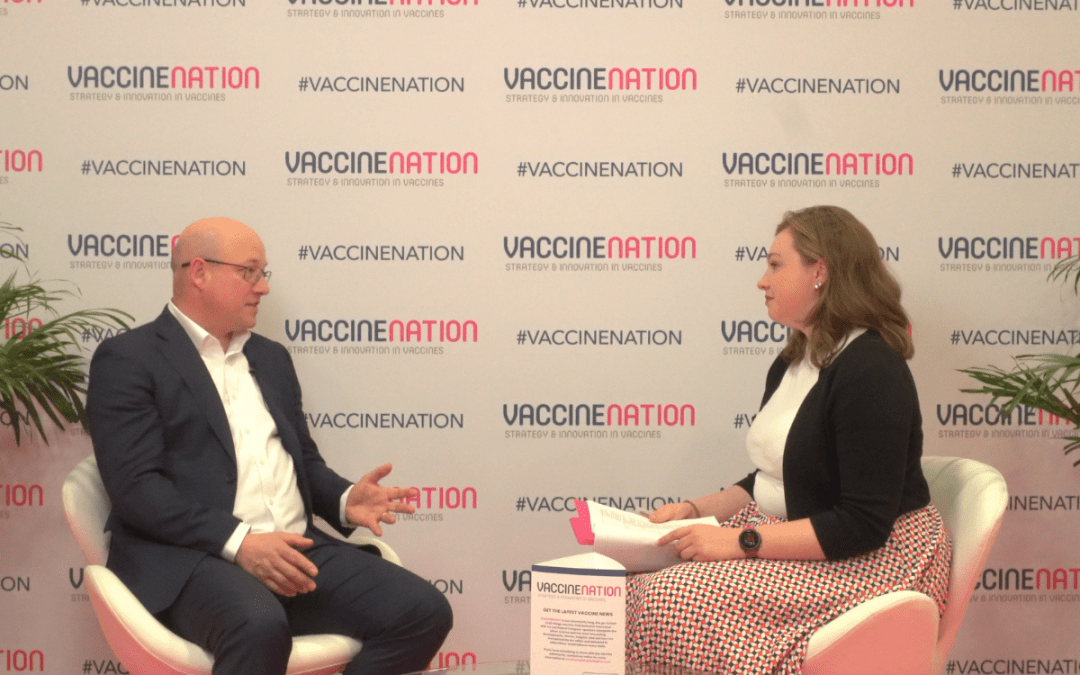
During our time in Washington for The World Vaccine Congress in April we were glad to meet some of our experts for exclusive conversations about their work. One of these experts is Dr Andrew Catchpole, Chief Scientific Officer at hVIVO; we were delighted that he was prepared to return to the hot-seat for another interview! Dr Catchpole joined us for the Influenza and Respiratory track to explore “New advances in respiratory virus challenge models improving their value for vaccine efficacy testing and host response disease monitoring”. Here we learn more about hVIVO’s work in this space; we hope you enjoy the interview!
Current and future challenge agents
Our first question invited Dr Catchpole to provide us with some examples of successful challenge agents from his team and insights into any that are coming in the future.
“It’s been a really busy year in terms of challenge agent manufacture, so we’ve been really keen to expand our portfolio as well as replenish our current challenge agents.”
One of these exciting updates is a “whole new panel” of influenza challenge agents, which are looking “good in the clinic” and providing great data so far. Furthermore, there are “completely new viruses coming along”, such as hMPV (human metapneumovirus).
“We’ve got some exciting times ahead!”
New facilities, the same high standards
With the opening of a new facility we asked Dr Catchpole what this means for current and future clients. He suggests that it’s “very important for us”. With 50 beds “all on one floor”, the facility provides efficiency.
“Really importantly, it enables us to do a broader range of challenge studies.”
Higher level pathogen studies, such as SARS-CoV-2 or dengue, can now be conducted with ease.
The changing landscape of trials
At the Congress we were surrounded by examples of innovation and accelerated efforts to drive forward a new generation of vaccines, so we asked Dr Catchpole for his opinion on how these efforts might influence or inform the landscape of Human Challenge Trials.
“As we see now new, completely novel types of vaccines coming along against a much wider range of diseases, and therefore also adoption of challenge models, we’re getting increasing demand from our clients to test completely different types of vaccines and completely different types of vaccines as well!
Dr Catchpole states that there has “always been a market for that”, as these studies can be “very efficient in getting that early proof-of-concept data”. Conversely, they identify where vaccines may not be working without wasting money on further trials.
“In addition, we’re seeing the reverse come true as well! So we’re seeing some of the more traditional technologies come through, which have already been proven in some markets but then want to hone different mechanisms or target different viruses.”
Thus, clients are coming to hVIVO with “increasingly large challenge studies”!
Why WVC?
Our final question, as always, invites the interviewee to share their expectations for the event. For Dr Catchpole, meeting clients to “understand their needs” was a critical aspect to the Congress. Furthermore, he and his team were using the time to promote their services and have discussions about doing “bespoke” studies, designed “deliberately”.
“We’ve had a lot of good discussions in that regard at this conference!”
It was lovely to speak to Dr Catchpole again and we hope to continue these conversations at future events.
For more conversations with our experts from the Congress in April do make sure you subscribe for weekly updates here!