by Charlotte Kilpatrick | Oct 23, 2024 | Global Health |
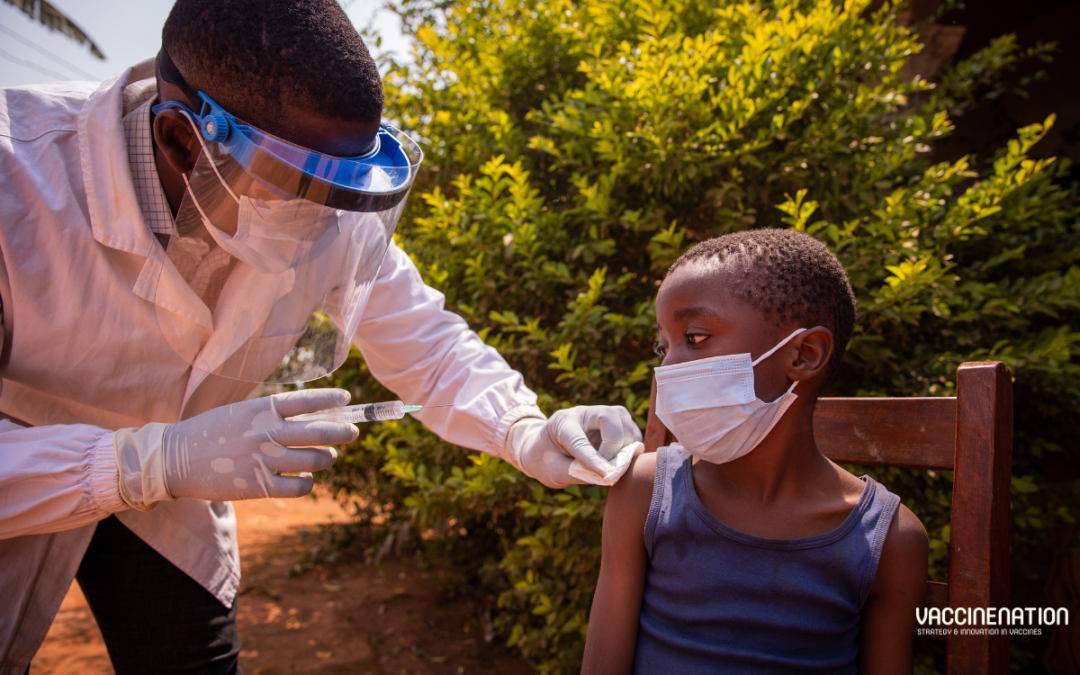
A study in The Lancet Global Health sought to provide counterfactual scenarios to evaluate the short-term effects of different vaccination strategies on mpox cases and deaths in the Democratic Republic of the Congo (DRC). The researchers used a dynamic transmission model to simulate mpox transmission, stratified by age and province; this was used to assess potential vaccination strategies and their effects on deaths and cases in an epidemic year. The results indicate that vaccinating children aged 15 years or younger, or younger than 5 years, in endemic regions, would be the “most efficient use of vaccines” when resources are limited.
Mpox in DRC
Mpox was first identified in the Democratic Republic of the Congo (DRC) in 1970; it is a zoonotic infectious disease caused by the monkeypox virus (MPXV), which is endemic in “numerous regions” of west and central Africa. MPXV has two clades:
- Clade I is endemic in central Africa with an estimated case fatality rate of up to 10% and mainly affecting children. It is divided into two subclades, Ia and Ib.
- Clade II was historically found in west Africa, with an estimated case fatality rate of up to 1%-3%. It is also divided into two subclades, IIa and IIb. Clade IIb was responsible for the global mpox epidemic in 2022.
The authors state that, until 2022, MPXV was not associated with large outbreaks; most cases were related directly to sylvatic transmission from animals to humans via hunting, wild game preparation, and consumption. Increases in human-to-human transmission were identified in 2017.
The researchers suggest that the low likelihood of transmission in the early decades after the virus’ discovery could be related to smallpox eradication programmes, which offered cross-immunity via vaccination against a related orthopoxvirus. Indeed, since the cessation of the smallpox vaccination programme in the DRC, there has been a “concurrent increase in mpox cases and outbreak frequency”. There is an ongoing, “unprecedentedly large” outbreak of clade I mpox in the DRC, with more than 14,000 reported suspected cases by the end of 2023 and a 4.6% case fatality rate. Over 70% of the deaths are in children younger than 15 years.
Genetic analyses of clade Ia MPXV genomes indicate that in this outbreak, multiple, independent zoonotic introductions into the human population have occurred from one or more reservoir species. An increasing burden of clade Ib MPXV infections have been identified in eastern DRC with evidence of “sustained” human-to-human transmission and many cases in women aged 15-29 years, but clade Ia infections continue to comprise most mpox cases in the DRC.
The study
Bavarian Nordic’s modified vaccinia Ankara vaccine (JYNNEOS) is protective against mpox. It was approved by the US FDA in 2019 but was not widely used against mpox until the 2022 outbreak, when it was “quickly mobilised to vaccinate people at high risk of infection in the USA and Europe”. Despite its high efficacy at two doses, it is “largely unavailable” outside the USA and Europe.
The authors aimed to inform policy and decision makers on the “potential benefits of, and resources needed,” for mpox vaccination campaigns in the DRC. They used an approach based on models from operations research and decision science to offer a robust analysis of policy choices “even in the context of incomplete and uncertain data”. The study uses mathematical modelling to simulate the spread of mpox in the DRC during 2023.
Without vaccination, the model predicted 14,700 cases of mpox and 700 deaths from mpox in the DRC over 365 days, consistent with reported estimates. Almost 50% of the cases and deaths came from the province of Equateur. Cases were evenly split between the three age groups: 34% in children under 5 years, 32% in children aged 5-15 years, and 34% in people older than 15 years. However, deaths were “predominantly” seen in children younger than 5 years (51%).
Vaccinating 80% of children younger than 5 years in all provinces or provinces with a history of mpox cases decreased the outbreak to 10,500 cases and 400 deaths. Vaccinating in endemic provinces increased cases to 10,700 and deaths remained the same. The numbers of vaccine doses needed for the strategies were 41.4 million (all provinces), 33.8 million (provinces with a history of mpox), and 13.2 million (endemic provinces only).
Vaccinating 80% of children younger than 15 years in all provinces or provinces with a history of mpox cases decreased the outbreak to 6,400 cases and 200 deaths. Vaccinating in endemic provinces increased cases to 6,800 and deaths remained the same. The numbers of vaccine doses required for these strategies were 81.6 million (all provinces), 67.1 million (provinces with a history of mpox), and 26.6 million (endemic provinces only).
Vaccinating 80% of all ages in all provinces or only non-endemic provinces with a history of cases decreased the case burden to 1,400 cases and 100 deaths, and 2,000 cases and 100 deaths when vaccinating in provinces endemic for mpox. The numbers of doses required for these strategies were 170.8 million (all provinces), 142.0 million (provinces with a history of mpox), and 56.8 million (endemic provinces only).
Managing resources
The paper finds that vaccinating all ages leads to the “largest impact on magnitude of cases and deaths”, but that vaccinating only children aged 15 years or younger provides “nearly the same effect with fewer vaccine doses required”. Although vaccinating only children younger than 5 years showed a “drop-off” in averted cases and deaths, it provides the most efficiency.
“This analysis shows the effectiveness of focussing an mpox vaccination campaign specifically in the provinces endemic for mpox in the DRC. This targeted strategy prevents nearly as many cases and deaths as broader approaches but uses fewer vaccine doses and thus would be less costly to implement.”
Alexandra Savinkina, fourth year PhD student in the Yale School of Public Health (YSPH) Department of Epidemiology (Microbial Diseases), commented that this study could influence vaccination policy.
“My hope is that it could help inform policy for vaccination in the country and potentially the region and move the needle forward on getting vaccines to the people who need them most in the DRC.”
Savinkina hopes that “we can learn from the global mpox outbreak that we can’t ignore disease in other places”.
“If the resources to help people exist, I think we should be using them, whether in the U.S. or in Africa.”
Dr Gregg Gonsalves, associate professor of epidemiology at YSPH, acknowledged barriers to access.
“We take it for granted that we can get a vaccination for COVID or a flu shot at our local CVS, but the infrastructure to deliver vaccines in DRC is far less robust.”
For more vaccine research updates, subscribe to our weekly newsletters here.
by Charlotte Kilpatrick | Oct 17, 2024 | Global Health |
A study in The Lancet Global Health estimates the impact that the 100 Days Mission could have had on the COVID-19 pandemic. The authors find that the implementation of non-pharmaceutical interventions (NPIs) within the 100 Days Mission could have averted around 8.33 million deaths, corresponding to a monetary saving of US$14.35 trillion. Investment in manufacturing and health systems contribute an increase to 11.01 million deaths averted. The researchers comment on the value of the 100 Days Mission but emphasise the importance of “prioritising a more equitable global vaccine distribution”.
In search of greater vaccine benefits
Although COVID-19 vaccines are estimated to have prevented almost 20 million deaths, the authors demand a better understanding of the “further health and economic benefits that could have been achieved” through shorter development times and “improved global equity in pandemic preparedness”. CEPI’s 100 Days Mission was proposed in 2021, establishing the ambition of cutting vaccine development time for new pathogens to 100 days. This about a third of the time taken to deliver the first COVID-19 vaccine.
“The availability of COVID-19 vaccines within 100 days would have substantially changed the pandemic; however, these benefits would be finite without enabling equitable access to vaccine products through system equity.”
Various efforts to encourage global vaccine distribution were “hampered” by inequities, and it is recognised that manufacturing capacity should be “expanded but also diversified” to “promote self-sufficiency and regional resilience”. Furthermore, supply chains and infrastructure must be scaled to enable the delivery of vaccines that rely on cold-chain infrastructure.
The study
The searchers hoped to quantify the potential impact of the 100 Days Mission by retrospectively estimating the effect it would have had on the COVID-19 pandemic, thus offering evidence to support decision making around future investments in research and development capabilities. They also aimed to quantify the impact of “additional investments”.
The analyses use an extended version of a previously published compartmental susceptible-exposed-infectious-recovered transmission model of COVID-19 vaccination with an explicit healthcare pathway. The vaccination pathway was expanded to include booster vaccination alongside waning efficacy, capturing the “restoration of immunity” through booster doses. The new vaccination pathway was parameterised to match platform-specific vaccine efficacy data and the duration of protection.
The authors modelled the impact of the 100 Days Mission by simulating a counterfactual scenario where the global vaccination campaign began on 20th April 2020, 100 days after the publication of the full SARS-CoV-2 genome. This scenario assumes that vaccinations in each country took the same roll-out process, but 232 days earlier. Two additional scenarios reflected “increased investment” in research and delivery infrastructure.
The Manufacturing scenario removed supply constraints, enabling the rollout of vaccination on 20th April 2020 in every country, without stockouts. The infrastructure-equity scenario enhanced both national health systems and global distribution networks so that all countries achieved 40% vaccine coverage in the first year and 40% booster coverage in the second year.
To account for the relaxing of non-pharmaceutical interventions (NPIs), the authors simulated three scenarios for NPI relaxation speeds as vaccination coverage improved. The History scenario assumed no changes, whereas the Target and Economic scenarios assumed earlier relaxing; the Target scenario lifted all restrictions over two months after reaching more than 80% adult coverage in high-income countries or more than 80% coverage in those older than 60 in other countries. The Economic scenario lifted NPIs more gradually after reaching the over-60 target, prioritising the reopening of schools.
Study findings
The results suggest that the 100 Days Mission could have averted an additional 8.33 million deaths due to COVID-19 by the end of 2021 when combined with the History NPI lifting scenario. In this scenario, an estimated 26.72 million severe cases of COVID-19 requiring hospitalisation and 1/44 billion infections would have been averted. Most of these averted deaths, hospitalisations, and infections would have occurred in low- and middle-income countries (LMICs).
The estimated VSLs (value of a statistical life) that could have been saved by the 100 Days Mission through the History scenario is US$22.61 trillion globally. As VSLs are “significantly higher” in HICs, 57% of the global value of statistical life averted occurred in HICs, even though most deaths would have been averted in LMICs. To estimate the monetary values associated with lives saved the authors multiplied the number of lives saved by the country-specific monetary VSL and by the value of a statistical life-year (VSLY).
“Increased investment in both global manufacturing and health systems infrastructure further increases the number of deaths that could be averted and the associated health-economic savings.”
In the 100 Days Mission with both manufacturing and health systems investments, an estimated 11.01 million deaths could have been averted and a value of $31.29 trillion in statistical lives saved. However, the authors describe this scenario as “unlikely”. In all scenarios involving the relaxing of NPIs thanks to earlier availability of vaccines, additional lives would have been saved.
In the Target NPI lifting scenario, an estimated 5.76 million deaths (100 Days Mission alone) to 9.20 million deaths (100 Days Mission with both manufacturing and infrastructure investments) could have been averted. In these scenarios, 12,600 and 23,900 fewer days of NPIs would have been implemented globally: 70 days and 133 days on average per country. Under the Economic scenario there were “similar trade-offs between public health and economic gains”. The public health and health economic outcomes would be greater than under the Target scenario, but still lower than the History scenarios.
Substantial benefits
“Earlier access to COVID-19 vaccines could have had substantial benefits.”
Most of the estimated averted deaths would have been concentrated in LMICs, but this demands investments in vaccine research, supported by “improvements to manufacturing and health system infrastructures”. With these investments, the authors estimate that 11 million deaths could have been prevented globally.
Although NPIs were effective at reducing transmission they incurred “significant economic and societal costs”, including consequences for education. Therefore, a major benefit of earlier access to vaccination is the reduction in school closures; in the Economic scenario, prioritising school opening could have averted 1,120 weeks of full school closures and 2,490 of partial school closures. This represents an average of 6 weeks of fully open schools and 14 weeks of partly open schools per country.
“Reopening schools and relaxing NPIs safely will crucially require scaling up both vaccine delivery infrastructure and manufacturing. Without addressing both aspects, advancements in vaccine development speed might not translate into equitable benefits globally.”
The results emphasise the importance of investments in support of the 100 Days Mission in controlling a future potential pandemic, with benefits for both health and economy.
“The 100 Days Mission is ambitious, requiring global innovation through creating vaccine libraries, clinical trial networks, accelerated immune response marker identification, rapid vaccine manufacturing, and strengthened global disease surveillance.”
CEO of CEPI, Dr Richard Hatchett, hopes that this research will encourage global commitment to the 100 Days Mission.
“This work shows in the starkest terms why the world needs to be prepared to move faster and more equitably when novel pandemic disease threats emerge. Investing in preparedness now to make the 100 Days Mission possible for future incipient pandemics will save millions upon millions of lives and protect the global economy against catastrophic losses.”
Join us at the Congress in Barcelona this month to explore how lessons from the COVID-19 pandemic can inform better global preparedness for pandemic and epidemic pressures, and don’t forget to subscribe to our weekly newsletters here.
by Charlotte Kilpatrick | Oct 8, 2024 | Therapeutic |
A study in the Journal for ImmunoTherapy of Cancer finds that vaccination in a clinically relevant genetic cancer mouse model generated a population of functional progenitor tumour-specific CD8 T cells (TST) and halted cancer progression, in contrast to immune checkpoint blockade (IBT) therapies. The authors hope that immunisation could be the “most effective strategy” for patients with early cancers or at high risk of cancer recurrence. This study takes a different approach to many cancer vaccine studies, which tend to focus on patients with advanced tumours.
Cancer vaccine potential
The authors recognise the transformational role of immunotherapies in the cancer treatment landscape, particularly in the case of immune checkpoint blockade (ICB). However, vaccines for non-viral cancers have had “more limited success”. Many studies on tumour-specific CD8 T cell (TST) vaccine responses are conducted in the established/late tumour setting, so less is known about how TST “respond and differentiate” in response to immunotherapy during early stages of tumorigenesis.
Previously, the authors developed an autochthonous mouse model of liver cancer (AST;Cre-ERT2) to initiate liver carcinogenesis with tamoxifen (TAM)-induced Cre-mediated SV40 large T antigen (TAG) expression in hepatocytes. TAG functions as an oncogene and a tumour-specific neoantigen recognised by CD8 T cells, so the model enables “precise temporal control” of the duration of TST interactions with transformed hepatocytes and tumours. In contrast to human tumours, which “arise sporadically and progress clonally”, TAM-induced oncogene induction is “highly efficient”, resulting in high antigen burden even at early stages.
The study
The researchers allowed AST;Cre-ERT2 mice to undergo stochastic TAG oncogene activation through sporadic, TAM-independent Cre-mediated activity. To explore TST responses against TAG-driven tumours they used congenic donor lymphocytes from transgenic mice, in which CD8 T cells express a single T cell receptor (TCR) specific for TAG epitope-I (TCRTAG). They found that TST became dysfunctional in TAM-treated AST;Cre-ERT2 mice and were “unable to halt tumour progression”. TAM-treated AST;Cre-ERT2 mice had a “substantial” tumour antigen burden, even at early stages of tumorigenesis.
To compare initial TST differentiation in mice with early liver lesions against those with late liver lesions, the researchers transferred CFSE-labelled naïve TCRTAG into early and late time point AST;Cre-ERT2 mice. TCRTAG in mice with early lesions divided at a slower rate, particularly in the spleen and ldLN, and there were fewer TCRTAG in the spleens, ldLN, and livers of early mice. Decreased TST proliferation in mice with early lesions could be due to the lower TAG antigen burden. Although nearly all TCRTAG in mice with late lesions and most in mice with early lesions failed to produce effector cytokines TNFα and IFNγ within 60 hours of transfer, a population of TCRTAG in were identified in the spleen and liver of mice with early lesions. These could produce effector cytokines TNFα and IFNγ.
“Thus, in hosts with sporadic early lesions, a subset of TST resisted rapid differentiation to the dysfunctional state, raising the possibility that this subset might be amenable to immunotherapeutic reprogramming/rescue.”
To see if this functional TST subset persisted, the authors examined TCRTAG immunophenotype and function 5 days and 21 days post-transfer into early or late AST;Cre-ERT2 mice. While fewer TCRTAG were found in mice with early lesions compared to late lesions at 5 days, the difference became less pronounced at 21 days. In both groups TCRTAG upregulated CD44, which indicates antigen exposure and activation. TCRTAG in early mice continued to express higher levels of PD1 than naïve TCRTAG, suggesting that PD1 expression can identify tumour-reactive TST in hosts with early lesions.
The next consideration was if the functional TST subset in mice with early lesions could be harnessed to stop tumour progression. LM, a gram-positive intracellular bacterium, induces strong CD4 and CD8 T cell responses. The researchers used an actA inIB deficient attenuated LM vaccination strain to test if early vaccination of AST;Cre-ERT2 would protect mice against liver cancer progression. Mice were either left untreated, given a single dose of empty LM, or vaccinated with a single dose of LM- TAG.
“LM- TAG–immunisation conferred a major survival advantage, with all mice remaining tumour-free and one mouse euthanised for dermatitis without any evidence of liver tumours.”
The mice in untreated and empty LM groups reached endpoint with “multiple” large liver tumours and increased liver weight. At endpoint, most TCRTAG in the LM- TAG–immunised made effector cytokines, in contrast to the TCRTAG in tumour-bearing mice in the other groups, which were “largely unable to produce effector cytokines”.
Vaccination vs ICB
“An important and open question in cancer immunotherapy is how ICB versus vaccination compares in boosting anticancer immune responses, and how best to combine and sequence these therapies.”
A comparison of ICB, LMTAG vaccination, and combined ICB/LMTAG vaccination found that ICB conferred no benefit in comparison with isotype control antibodies (iso). By contrast, LMTAG and ICB/LMTAG treated mice had no evidence of tumour progression at 400+ days. Furthermore, LMTAG vaccination, whether alone or in combination, led to a “substantial increase” in TST numbers and IFNγ production, while ICB alone had “little impact”.
LM-based vaccines have had “poor or mixed results” in clinical trials, often with a target of patients with advanced or refractory cancers. The authors hope that their studies offer “mechanistic insight” as to why these fail in patients with advanced cancers: “for vaccines to be effective, a progenitor TST population must be present”. Although the apparent superiority of vaccination over ICB “may be surprising at first glance”, the authors highlight an important point, that “not all TCF1+TST are functional, nor does ICB alone lead to functional TST”. However, the findings suggest that LMTAG vaccination maintains or rescues functional progenitor TCF1+TST.
Timing is important
Dr Mary Philip, associate director of the Vanderbilt Institute for Infection, Immunology, and Inflammation, commented that the study “suggests that the timing of vaccination is important”.
“A unique feature of our study is that these mice are at high, essentially 100% risk of developing cancers, so the fact that a single immunisation at the right time can give lifelong protection is pretty striking.”
Dr Philip reflected that very few studies follow mice “so long after vaccination” and find them tumour free for two years.
“ICB works by taking the brakes off T cells, but if the T cells have never been properly activated, they are like cars without gas, and ICB doesn’t work. The vaccination boosts the T cells into a functional state so that they can eliminate early cancer cells.”
For more progress updates from cancer vaccine researchers at the Congress in Barcelona this month, get your tickets to join us here. Don’t forget to subscribe to our weekly newsletters here.
by Charlotte Kilpatrick | Sep 26, 2024 | Global Health |
A $4.2 million Programme Project Grant renewal from the National Institutes of Health (NIH) National Institute of Allergy and Infectious Diseases (NIAID) in September 2024 will fund efforts by researchers at Weill Cornell Medicine to develop a cytomegalovirus (CMV) vaccine. The vaccine is intended to prevent the transmission of cytomegalovirus from mother to baby during pregnancy. The grant could be extended for five years and $20.4 million to enable research to accelerate the vaccine’s development.
Protecting the foetus
Cytomegalovirus (CMV) is the most common congenital infection worldwide, but Dr Sallie Permar, chair of the Department of Paediatrics at Weill Cornell Medicine, hopes to find a vaccine that prevents transmission of the virus to the developing foetus. Around 1 in 200 babies is born with CMV, with one-quarter of them experiencing long-lasting effects such as hearing loss, microcephaly, developmental delays, and seizures. Dr Permar compares the effects to those recognised in the Zika epidemic, commenting that CMV “affects ten times as many infants”.
“If we could eliminate this terrible congenital infection, we would give more babies the chance to achieve their full potential in life.”
A model of transmission
More than half of all adults live with CMV, but if it is acquired for the first time during pregnancy, the mother has a 30% to 40% chance of passing the virus to her baby. As it is “challenging” to design a clinical trial large enough to assess the effectiveness of a CMV vaccine to protect the foetus, Dr Permar has created a collaborative network. With researchers at the University of California Davis Primate Centre, Tulane University, and Oregon Health Sciences University (OSHU) and Primate Centre, Dr Permar has developed a non-human primate model of congenital CMV transmission to test vaccines.
“This work requires a cadre of multidisciplinary virologists, immunologists, pathologists, physicians, and veterinary scientists who all care deeply about eliminating this devastating childhood infection through vaccination.”
Tackling “immune-evading tactics”
Dr Permar states that CMV has “multiple strategies” for evading host immunity; the virus conceals itself in a person’s cells and producing factors to catch host antibodies, disable common killer T cells, and cause confusion for the antiviral immune response. With the latest grant renewal, the researchers will explore approaches for “thwarting these viral immune-evading tactics”.
The team will use weakened viruses and some of the virus’ own protein factors as antigens to induce the production of antibodies against “CMV’s evasive manoeuvres”. They hope to have a prototype for a vaccine in five years, at which point they could advise the industry on vaccines that are currently in clinical trials.
For insights into maternal vaccine challenges and strategies at the Congress in Barcelona next month, get your tickets to join us here, and don’t forget to subscribe to our newsletters for regular vaccine news.
by Charlotte Kilpatrick | May 24, 2024 | Technology |
CEPI announced in May 2024 that it is supporting researchers from the University of Oxford on a project called ‘PREpare using Simulated Trial Optimisation (PRESTO)’. The scientists will use computer simulations to “generate important insights” on how vaccine clinical trials can be used to stop the spread of an emerging outbreak. CEPI is contributing $2.4 million to the Pandemic Sciences Institute; the diseases tested in this project are on CEPI’s priority list and WHO’s R&D Blueprint: Nipah, Chikungunya, Lassa, Rift Valley fever, Ebola and related viruses, Coronaviruses, and ‘Disease X’.
Getting a head start
Dr Richard Hatchett, CEO of CEPI, commented that as an outbreak occurs, we will not have time to “get all the information we need to tell us how best to conduct pivotal clinical trials”.
“Mathematical modelling can give us a head start by forecasting how a worrisome virus might spread and what we need to do to respond.”
The project’s optimal study designs will “allow health officials to make quick, informed decisions on the best steps” towards “more efficient vaccine testing and rapid evidence generation”. This will improve and accelerate the outbreak response.
Data generated in existing CEPI-funded research will be fed into a computer model with evidence from previous outbreaks to create hypothetical scenarios that investigate a selected virus. The findings from these scenarios will be used in analysis sheets that “rank the suitability of different clinical trial options”. CEPI offers the example of recommending a randomised controlled trial or a vaccination trial.
The project will span three years and begins with models of Nipah. Should an outbreak of Disease X occur, the team will direct their efforts to the emerging pathogen, making clinical trial data “rapidly available” to enable faster public health response efforts. The computer software will also be shared on an open-source platform and developed in a “modular manner” to allow external researchers to run tests and update the tool with new data.
100 Days Mission
This project aligns with CEPI’s 100 Days Mission by preparing clinical trial frameworks before an outbreak occurs. Professor Christophe Fraser, Professor of Infectious Disease Epidemiology at the Pandemic Sciences Institute, emphasised that “ensuring vaccines can be robustly tested at speed is critical” in efforts to “better respond” to future pandemic threats.
“With every day of delay potentially costing many lives, and with the recent experience from COVID-19, we now have an opportunity to develop improved vaccine clinical trial designs so we can hit the ground running in a disease outbreak.”
Professor Fraser states that the PRESTO project will bring together mathematical modellers, ethicists, regulators, vaccine manufacturers, and field teams to “study what works with different pathogens in different settings”.
“Our aim isn’t to find the theoretical abstract best solution, but to develop models that allow decision-makers to explore the impact of the inevitable trade-offs that they will have to make in different settings.”
For more on technology to facilitate better pandemic preparedness, why not subscribe to our weekly newsletters here?
by Charlotte Kilpatrick | Jan 18, 2024 | Technology |
A review in Current Opinion in Chemical Engineering in 2024 highlights how model-based approaches are critical in “accelerating vaccine manufacturing process development”, with the authors emphasising the “significance” of an integrated modelling platform for vaccine manufacturing.
“Vaccine administration is widely recognised as one of the most valuable healthcare interventions for routine immunisation and outbreaks management.”
The importance of developing “efficient and effective pharmaceutical manufacturing processes” was “underscored” by the COVID-19 pandemic as we became more acutely aware of the need for “affordable” vaccines that are available at scale and accessible in as little time as possible.
Continued challenges
The authors recognise that “remarkable advancements” in vaccine discovery science have been made but suggest that the “task of effectively scaling up laboratory-based processes for commercial manufacturing” poses a continued, significant challenge.
“The manufacturing process plays a crucial role in preserving the essential properties identified during vaccine discovery, enabling the production of substantial quantities under tightly controlled conditions for clinical trials and subsequent market supply.”
Vaccine production is “lengthy and cost costly” in nature, with process development accounting for up to 30% of the time taken for successful market introduction of a vaccine.
Innovative technology
Regulatory bodies are keen to enhance the efficiency of pharmaceutical manufacturing and have “encouraged the adoption of innovative methodologies” through Process Analytical Technology (PAT) frameworks and implementation of Quality by Design (QbD) principles. These highlight the importance of knowledge-based tools that “enable manufacturers to better understand, predict, and assure the quality of their products”.
Although model-based approaches have been “widely applied in diverse biomanufacturing domains” for enhanced production efficiency, vaccine biomanufacturing has “not kept pace”. The paper suggests that this is partly attributable to the “ever-evolving landscape” of vaccine types. Furthermore, regulatory concerns “contribute to this constraint”.
Therefore, the authors present an “overview of recent advances in model-based approaches for the purpose of improving process development”, giving an “outlook” on how an integrated model-based approach could influence vaccine manufacturing in the future.
Why incorporate modelling?
The paper identifies “several distinct advantages” to modelling in the context of process development. For example, it offers a “robust framework for understanding the underlying mechanisms of the process”. It can also be a “valuable aid” in the planning and designing of experimental setups and in the evaluation of value propositions and associated risks of new products and processes. Validated models can be applied to the development of advanced control strategies in later stages, and models have recently become popular for the prediction of environmental impacts of processes.
“Models have far-reaching implications beyond process development, particularly in the manufacturing stage. They are the key elements of digital twin and real-time model-based control strategies and can significantly improve the efficiency of manufacturing processes when integrated with real-time data.”
Modelling approaches range from the mechanistic to the empirical, data-driven to hybrid. The latter has emerged as an “effective approach” that combines the “predictive capabilities of mechanistic models” with the “efficiency of data-driven models”.
“This integration allows for minimising the amount of data needed for model development while ensuring the inclusion of physical relevance to key processes.”
A case study in integration
“To achieve an integrated model, a systematic and holistic approach is necessary for harmonisation of the unit operations. This includes interface compatibility, availability and robustness of parameter outputs and inputs, production scales, as well as modes of operations.”
Indeed, the authors state that “failure to couple the unit operations together in a simulation model” is a significant risk in bioprocess modelling. Therefore, it is “essential to comprehensively assess the issues related to heterogeneity, inconsistency, and varying model accuracy across unit processes.” A presented case study is the Inno4Vac project (Innovations to accelerate vaccine development and manufacture).
A key focus of the project is subtopic 4 (ST4), which considers the establishment of a modular open-source computational platform for in silico modelling of protein subunit vaccine biomanufacturing and stability testing. ST4 comprises 5 work packages (WPs) in pursuit of the following objectives:
- WP16: develop stability prediction models for vaccine manufacturing using linear and nonlinear equations and integrate them into a global biomanufacturing platform.
- WP17: establish a cloud-based platform to assess the performance and robustness of biomanufacturing processes, with a specific emphasis on scaling up and down in the production of vaccines using E.coli.
- WP18: create digital twins for key purification units, apply advanced in silico analysis and design tools, and enable real-time control to optimise downstream processing, especially for scale changes.
- WP19: validate the predictive capabilities of in silico models for vaccine stability, unit operations in protein subunit vaccine manufacturing, and control modules developed in WP18.
- WP20: initiate a regulatory dialogue to engage with authorities, paving the way for the future inclusion of predictive modelling in chemistry, manufacturing, and control (CMC) dossiers for vaccines.
The authors conclude that model-based approaches offer “significant opportunities for enhancing vaccine production” but highlight the value of developing an integrated modelling platform for biopharmaceutical manufacturing as exemplified by Inno4Vac.
Do you use modelling in your work, or did you find the publication a helpful insight into how model-based approaches could be implemented in vaccine development? For more on improving and invigorating vaccine manufacturing processes, do join us at the Congress in Washington this April or subscribe to our newsletters here.