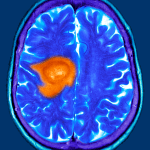
In August 2024 researchers at the University of California, Los Angeles (UCLA) announced the launch of a “first-of-its-kind” clinical trial to evaluate the safety and effectiveness of a cancer vaccine that targets H3 G34-mutant diffuse hemispheric glioma, a “highly aggressive” brain tumour that is “typically” found in adolescents and young adults. The vaccine, developed at UCLA, is designed to target genetic mutations of the H3-3A gene. The trial will start with patients over the age of 18 before expanding to include patients as young as 5 years who have a confirmed diagnosis of H3 G34-mutant diffuse hemispheric glioma.
“The clinical trial aims to improve survival rates and provide new insights into how the immune system responds to primary brain cancers and understand whether these targets engender a lasting anti-tumour immune response.”
H3 G34-mutant diffuse hemispheric glioma
One of the “most lethal forms of paediatric brain cancer”, H3 G34-mutant diffuse hemispheric glioma is a “highly aggressive brain tumour” primarily characterised by a mutation in the H3-3A gene. This gene encodes an “important regulatory component” on histone H3. The mutation causes “significant disruptions” in RNA processing, which has “wide-ranging influences on cancer behaviour and response to treatment”. UCLA Health is the only centre in the US that is investigating immunotherapy for this type of glioma.
Dr Anthony Wang, director of the Paediatric Brain Tumour Programme at UCLA Health and principal investigator of the trial, commented that the brain tumour “evades current therapies with shocking efficiency”, even in the face of “aggressive treatments”.
“These cancers show a host of escape pathways, allowing small populations of cells to survive initial treatment and to adapt. The data from our pre-clinical studies make us hopeful that an active, targeted cancer vaccine will be able to adapt with the tumour, in order to eliminate cancer cells more effectively.”
A vaccine opportunity
The vaccine will be manufactured by the UCLA Human Gene and Cell Therapy Facility; it is a dendritic cell vaccine that “works by arming a patient’s dendritic cells” against products of the altered RNA regulation. After the dendritic cells have been activated against the targets they are injected back into the patient.
Dr Dawn Ward, medical director of the UCLA Human Gene and Cell Facility and associate clinical professor of pathology and laboratory medicine at the David Geffen School of Medicine, said that “our job is to help accelerate the development of novel cures”.
“We do this by providing a highly regulated environment to ensure the identity, strength, quality, and purity of drug and cell products.”
Dr Robert Prins, professor in the departments of neurosurgery and molecular and medical pharmacology at the David Geffen School of Medicine, stated that the development of “effective” cancer immunotherapies “requires a deep understanding of the tumour antigens targeted by the immune system”.
“We found that the histone H3 G34R mutation significantly alters mRNA regulation, inducing a conserved set of mRNA splicing changes that result in neoantigens potentially targetable by T lymphocytes.”
This dysregulation is described as an “attractive target” for dendritic cell vaccination by UCLA Health. Through a collaboration with Professor Yi Xing of the Children’s Hospital of Philadelphia, the team developed a computational tool called IRIS (Isoform peptides from RNA splicing for Immunotherapy target Screening). This tool enables the identification of neoantigen targets.
Dr Linda Liau, chair of neurosurgery at UCLA Health, described the trial as a “novel and potentially transformative approach” to the treatment of high-grade gliomas in children and young adults.
“We are optimistic that this research could lead to more advanced studies and eventually a new standard of care for this challenging subtype of brain cancer.”
To participate in discussions at the frontier of cancer vaccine development at the Congress in Barcelona, get your tickets here, and don’t forget to subscribe to our weekly newsletters for more updates.