
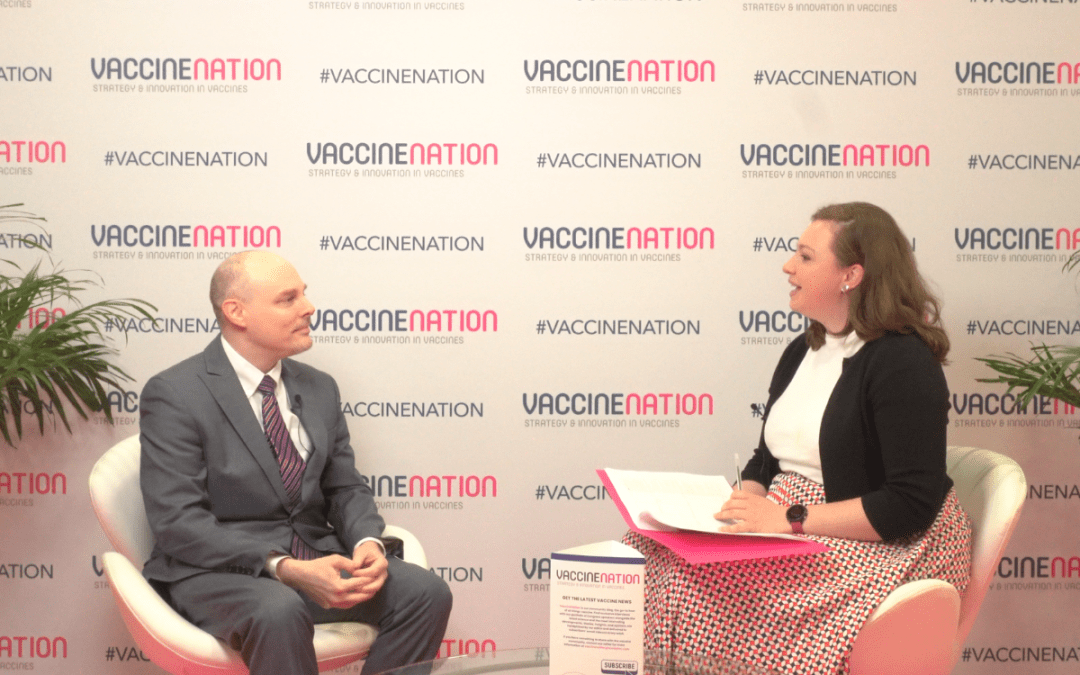
The next in our series of interviews with experts from The World Vaccine Congress in Washington features Brian Dean Abramson of the National Vaccine Law Association. He joined us in the Vaccine Partnerships track to explore “how we teach about vaccines and vaccination”. As a member of the Board of Directors at the National Vaccine Law Association and founding chair, he continues to work with the organisation on their conferences and other activities.
Teaching vaccines and vaccination
We begin by considering the panel and asking Brian to share a bit about the key considerations or concerns that he was expecting to discuss. He explains that the panel was sparked by a comment made by a medical professional during the pandemic about not learning the ‘truth’ about vaccines in medical school.
“There is a small but noisy proportion of people in the medical community, who really should know better, who get caught up in anti-vaccine rhetoric and misinformation.”
Brian asks “are we doing enough” to ensure our medial professionals are “not susceptible to misinformation themselves” and are then able to communicate with their patients.
National Vaccine Law Association: serving the continuum
We then explore the work of the National Vaccine Law Association, which “also developed out of a need displayed out of the pandemic”. Brian explains that there are many areas of vaccine law, from helping manufacturers get licensure to developing public health policies.
“All of these groups of people tend to be very siloed in their field, so they don’t communicate with each other. We felt it was necessary to create a structure to bring people in all these different fields together.”
With a structure to facilitate “trans-disciplinary conversations”, experts are able to understand the role that everyone else plays in the “continuum” of efforts to vaccinate the population. This structure also emphasises each role in serving the public policy goal.
“We’re developing the umbrella structure under which everyone can come together and get the most up to date and accurate information, and then also collaborate and talk with each other.”
Keeping pace with technology
Our next question considers either individual components or the “umbrella” as a whole, wondering about how effectively or comfortably the law is keeping up with technological developments.
“The law, as a whole, tends to lag behind developments in technology.”
Brian explains that law is traditionally “very reactive to crisis”.
“But we never have the same crisis twice.”
For example, during the COVID pandemic there was an mpox outbreak. Brian states that many public health people tried to adapt COVID mechanisms to mpox, which is a “very different disease” that needs “very different strategies”.
“We find ourselves, very often, with legal structures that were designed for a previous time or a previous event, and trying to figure out how to use those structures to deal with the next crisis.”
Thus, the Association is making efforts to keep on the “cutting edge” with the law. This is complicated by the fact that the “law is not uniform”, in the US alone! Brian considers Tennessee legislation to “ban” the introduction of vaccines to food, which is a legislative response to viral misinformation. Another side is “novel litigation theories”, from pursuing the development of technologies to efforts “in opposition of those”.
Why WVC?
As usual, we conclude by asking our experts about their intentions for the event, or what they hope to have achieved by the end. Brian has been joining us for several years, and has (thankfully!) had a “better and better experience every time”. He is glad of the opportunity to meet experts from other areas of the vaccine community and consider how their work informs, or will inform, his.
“I’m learning new things that I can apply in my own work every day.”
As a vaccine law teacher, Brian is conscious that these lessons can be translated back into his classroom for the “next generation” of vaccine experts.
It was a pleasure to speak to Brian and hear some different, and incredibly valuable, perspectives on current vaccine issues. We hope you enjoy the interview.
For more conversations with our experts from the Congress in April do make sure you subscribe for weekly updates here!


