
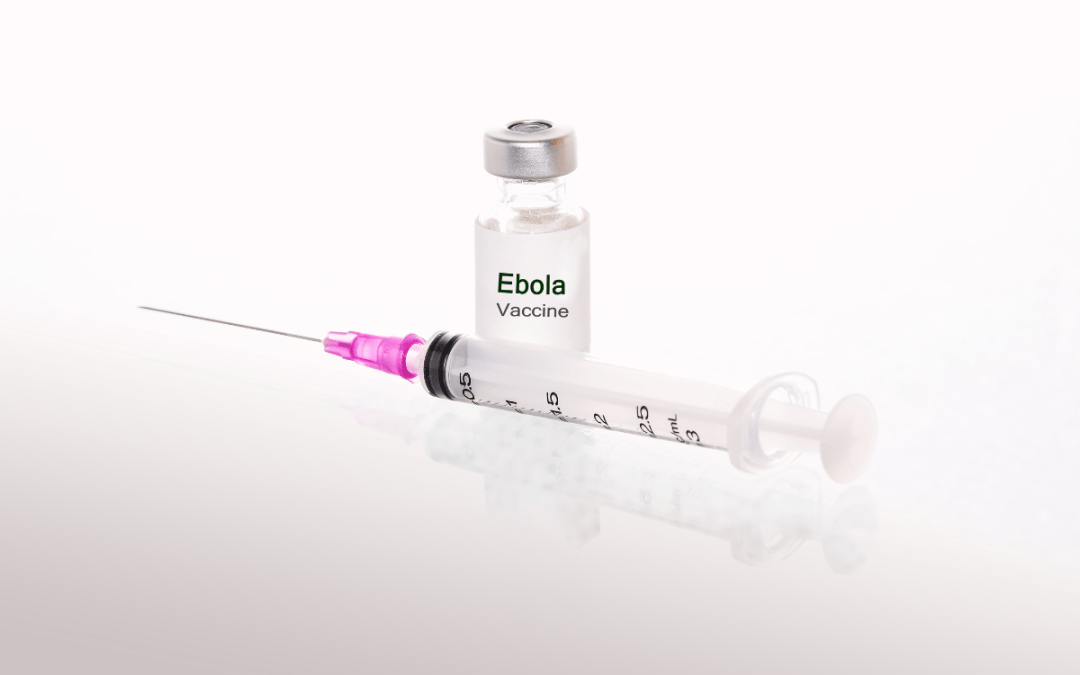
A paper in The Lancet Infectious Diseases in February 2024 presents the results of a retrospective cohort analysis of patients with confirmed Ebola virus disease admitted to Ebola health facilities in the Democratic Republic of the Congo from July 2018 to April 2020. The study sought to describe the protective effect of rVSVΔG-ZEBOV-GP vaccination against death among patients and finds that vaccination was protective against death for “all patients”, even after adjustment for Ebola virus disease-specific treatment, age group, and time from onset of symptoms to admission.
Zaire ebolavirus
Zaire ebolavirus is one of the known species of the haemorrhagic fever virus within the filoviridae family. The first recognised outbreak in 1976 prompted vaccine development responses as it is associated with a high case fatality risk in infected individuals. The authors recognise that “innovative approaches” have “fostered substantial scientific advances”, which include the development of new therapeutics and vaccines.
rVSVΔG-ZEBOV-GP
rVSVΔG-ZEBOV-GP was developed by Merck and is administered as a single, intramuscular dose. It contains the recombinant vesicular stomatitis virus with a deletion of the envelope glycoprotein, replaced with the Ebola virus surface glycoprotein. After proving safe and effective against Ebola virus disease it was prequalified by WHO in 2019.
The study identifies a need to describe the effectiveness of the vaccine against infection but also “severe disease and death”. Therefore, the authors describe the case fatality risk (CFR) among patients with confirmed Ebola virus disease admitted to health facilities during the 10th Ebola virus disease epidemic in the Democratic Republic of the Congo, comparing outcomes in both vaccinated and unvaccinated patients and the effect of vaccine timing on efficacy.
What does the study find?
2279 patients with confirmed Ebola virus disease were analysed. 1300 were female (57%) and 979 were male (43%). In adjusted analyses, vaccination “significantly lowered the risk of death” in comparison with no vaccination. Protection increased as time elapsed from vaccination to symptom onset.
“It is likely that many of the vaccinated breakthrough cases seen in this cohort would have had sufficient time to mount an immune response against Ebola virus disease.”
Although the vaccine “did not protect some individuals” against infection, it did offer protection against mortality, leading to a CFR of 25.1% in vaccinated individuals. This contrasts to the CFR observed in patients who were not vaccinated (56.2%) and previous data that showed high CFR among patients with confirmed Ebola virus disease.
The authors suggest that the vaccine’s ability to reduce the CFR could be partly due to patients who had been vaccinated showing “higher cycle threshold values for nucleoprotein at admission”. This difference reportedly increased as the time between vaccination and symptom onset increased.
“Our results reinforce the importance of vaccination and, in the event of vaccine failure, the need for efficient administration of Ebola virus disease-specific treatment.”
Notably, late vaccination, administered after disease exposure, was “significantly protective” against death.
“Our results reinforce the importance of vaccinating populations who are at risk of exposure to Ebola virus to reduce the risk of infection and – if infection occurs – the risk of death.”
We’ll explore the role of vaccination in Ebola management at the Congress in Washington this April. To get your tickets to join us click here. If you can’t make it, why not subscribe for more insights and updates?


