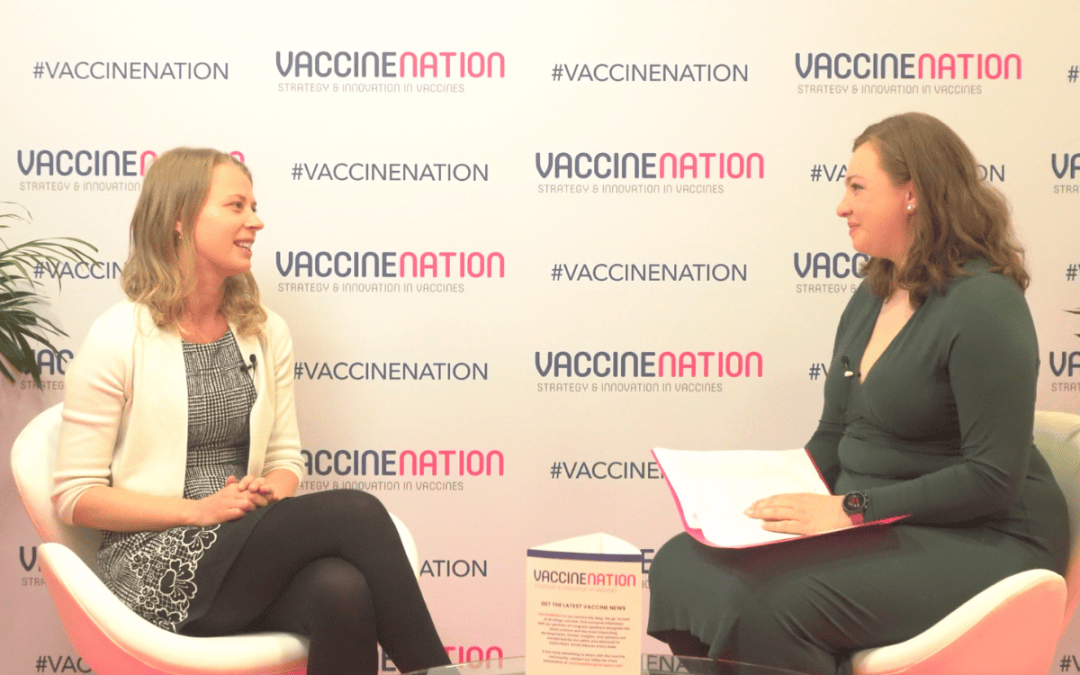
Next in our series of conversations with experts at The World Vaccine Congress in Washington is an interview with Economist Impact’s Emily Tiemann, who joined us to chair the Market Access track. Emily is a Manager in the Health Policy and Insights team, the “research arm” of the group that is focused on client-sponsored work that produces engaging content such as white papers, videos, and infographics to “drive change”.
Cervical cancer and the HPV vaccine
Some of Emily’s work with Economist Impact considers cervical cancer and the HPV vaccine, so we asked about some of the key concerns that the team is addressing at the moment. She begins by sharing that cervical cancer is a disease with a high, and growing, burden. However, it is “unique” because it is preventable with the HPV vaccine.
“Despite the existence of the vaccine there is a lot of concern about access.”
This can be tracked with the income level of countries; most high income countries have “organised vaccination campaigns”, but lower income countries have lower coverage.
“Globally only about 13-15% of eligible girls have been vaccinated with the HPV vaccine, which is quite low.”
Emily suggests that it’s a “good time” to discuss these concerns. She refers to the WHO global targets for 2030 and shares that the vaccination target is 90% of the eligible population should be vaccinated with the HPV vaccine.
“There’s a lot of work to do to reach those targets.”
Another major concern is screening, as “early diagnosis is really key to better health outcomes”. Access issues come into play again here, with countries with “better health system infrastructure” in a better position to provide screening programmes. Emily tells us that, by 2030, 70% of women should be screened with a “high performing test”, and we are “not really at those levels”.
Barriers to coverage
As Emily has mentioned access, we asked her to expand on some of the barriers to access that might be identified in different regions. She recognises that “the main barriers are around cost”. This goes beyond the vaccine to the infrastructure needed to deliver it and political will.
“Another big gap is awareness, and that can also be stigma.”
Emily suggests that some cultures might associate the HPV vaccine with sexually transmitted diseases or believe that their children don’t need to take it.
“Really we need to communicate better, we need to raise that awareness.”
In terms of communication, Emily emphasises “reaching the community where they are”, both in terms of location and culture. She considers the use of school-based vaccination strategies in some countries, which is an effective method, but still demands understanding and awareness.
Communication
With the importance of communication in mind, we asked what Economist Impact is doing to contribute to these efforts. She refers to different clients such as Roche and MSD, with whom Economist Impact is raising awareness and suggesting a “way forward”. An example of this a recent investigation into the need for investment in women’s cancers in the APAC region. The team considered “emerging” countries, and suggested some regional and country-level recommendations to enable each country to “meet the challenges of cervical cancer”, get necessary investment, and raise rates of vaccination and screening for “better outcomes”. Recommendations include developing a “collaborative message”, implementing and updating elimination plans and strategies, and having better performance tracking.
“We have to have clear goals, clear aims”.
Other recommendations place an emphasis on patient-centric approaches, making screening and vaccination as easy as possible. This might include at-home testing, which can be a way to “bridge those gaps”. Economist Impact also considers countries in Europe, and a country that doing well is Sweden, which the team used as a case study. These lessons can be applied to other countries. Another case study is Rwanda, which has “extremely high vaccination rates”.
“It’s good to be able to learn from these countries.”
From these case studies, Economist Impact developed a ten-point plan for cervical cancer elimination. This is already in use across the globe, supporting countries on their way to cervical cancer elimination.
Why WVC?
As always, we conclude with a question about the event and our experts’ expectations or experiences. Emily suggests that it’s “always so inspiring” to meet “top of their field” colleagues who are able to “drive change”. She values the opportunity to spread the message about her work and hear about others’ progress.
“Talking and sharing ideas I think is key.”
Emily refers to sessions on access, which always has a place on our agendas, as our experts consider how to use these life-saving interventions.
“It’s not just getting vaccines made…once we have the vaccine we have to make sure it’s getting to the right people.”
It was a pleasure to meet Emily and we hope that you enjoy the interview!
For more conversations with our experts from the Congress in April do make sure you subscribe for weekly updates here!