
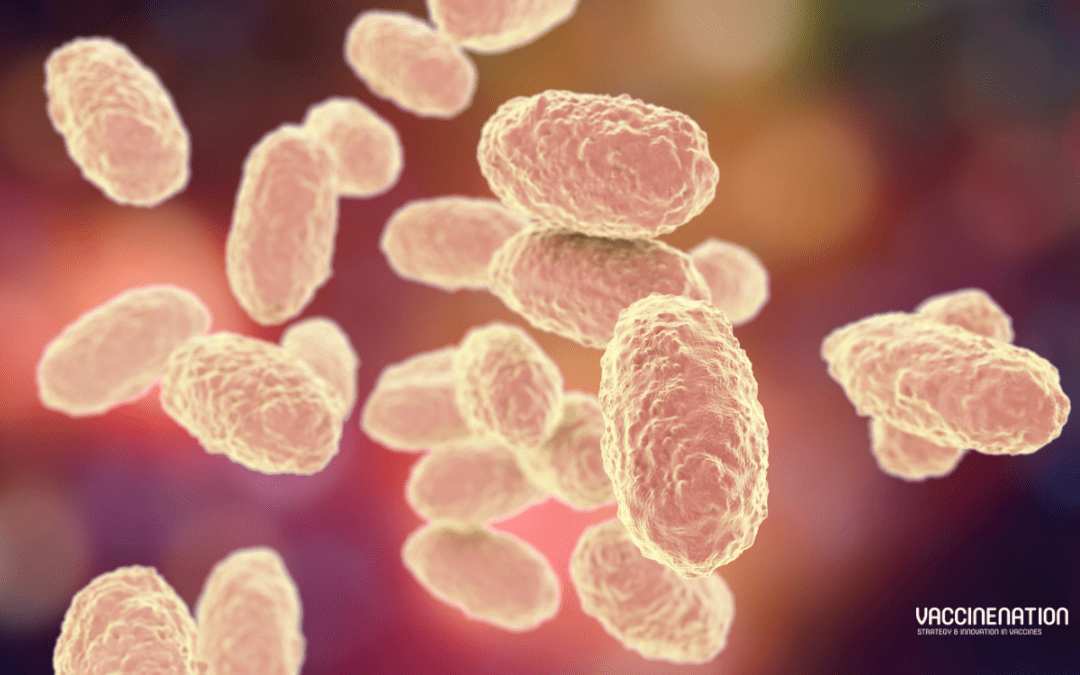
A study in npj vaccines in June 2024 presents the mRNA vaccine platform as a potential solution to bacterial infections. Immunogenicity and challenge models were used in evaluations of the platform with multivalent vaccine formulations that target Bordetella pertussis antigens and diphtheria and tetanus toxoids. The authors state that immunisation with mRNA formulations were immunogenetic and induced antigen specific antibodies and Th1 cell responses, illustrating the platform’s potential.
Pertussis and vaccines
The paper describes Bordetella pertussis, the causative agent of whooping cough, as a “respiratory pathogen that remains a global concern”. A first-generation vaccine was developed with formalin killed whole B. pertussis combined with diphtheria and tetanus toxoids with an adjuvant (DTP). After reactogenicity “concerns”, acellular pertussis vaccines were developed before formulation with diphtheria and tetanus toxoid. An estimated 30% of the global population receives a paediatric acellular series of DTaP-based vaccines. Despite high coverage, transmission of B. pertussis “remains an issue among both children and adults”.
Research indicates that the humoral response elicited by these vaccines wanes “quickly”, with vaccinated individuals having potential to serve as asymptomatic carriers. Furthermore, it has been suggested that “vaccine pressure has resulted in strains that no longer express the pertactin antigen”, affecting vaccine efficacy. Waning efficacy is inferred from the fact that “approximately half of pertussis cases” in the US occur in children over one year old, after a primary series of DTaP at 2, 4, and 6 months, before a final boost between 4 and 6 years old.
“It may be possible to ameliorate this issue by replacing the Tdap booster with a superior formulation.”
A possible solution
The benefit of mRNA vaccines formulated in lipid nanoparticles (LNP) is a “fast, adaptable, and affordable approach” to developing novel vaccines. Reflecting on COVID-19 vaccines development, the authors state that the mRNA vaccine development process can be “utilised to rapidly respond to emerging pathogens”. Other pre-clinical studies have shown mRNA vaccine efficacy for bacterial pathogens such as Lyme disease and plague.
“A majority of the mRNA vaccine studies to date investigate mRNA vaccines as an immunisation approach to protect against viral infections, but the rapid in silico design and high safety profile of mRNA vaccines suggests mRNA could be used a strategy to prevent bacterial infections as well.”
The researchers sought to develop a multivalent pertussis mRNA vaccine, which offers “a unique way to increase the number of B. pertussis antigens” and the “opportunity to design a vaccine that affords protection against more than one pathogen within a combinational vaccine formulation”.
The study
The study aimed to design and evaluate an “array” of pertussis mRNA vaccines to formulate a multivalent mRNA DTP vaccine, tested against disease in a mouse model. Mice were immunised with Alum, DtAp, mRNA-DTP-6 vaccine, or a control mRNA formulated vaccine containing a non-encoding mRNA (LNP-ncRNA). Through Luminex analysis of antibodies from mice immunised with mRNA-DTP-6 vaccine it was confirmed that all antigens were immunogenic.
Compared to DTaP, the mRNA vaccine induced “comparable” levels of anti-FHA, PTX-S1, and DT toxoid antibodies. There was also a “significant increase” in the level of anti-PRN antibodies from the mRNA-DTP-6 vaccine compared to DTaP vaccination. Furthermore, despite a “significant decrease” in anti-FimD/2/3 and TT specific antibodies from mRNA-DTP-6, the antigen specific antibodies were present and “roughly two logs higher than the negative control”.
“Overall, this data suggests that mRNA-DTP-6 vaccine can elicit antigen specific responses comparable to the current DTaP protein vaccine in mice.”
The study demonstrates proof of concept that multivalent mRNA vaccines for bacterial pathogens can be “robustly immunogenic”. The authors intend to “further characterise and optimise” the mRNA encoded antigens to “better understand the structural moieties contributing to the protection observed in the mouse challenge model”.
For more updates on vaccine research and innovation, why not subscribe to our weekly newsletters here or get your tickets to join us at The World Vaccine Congress in Barcelona this October?


