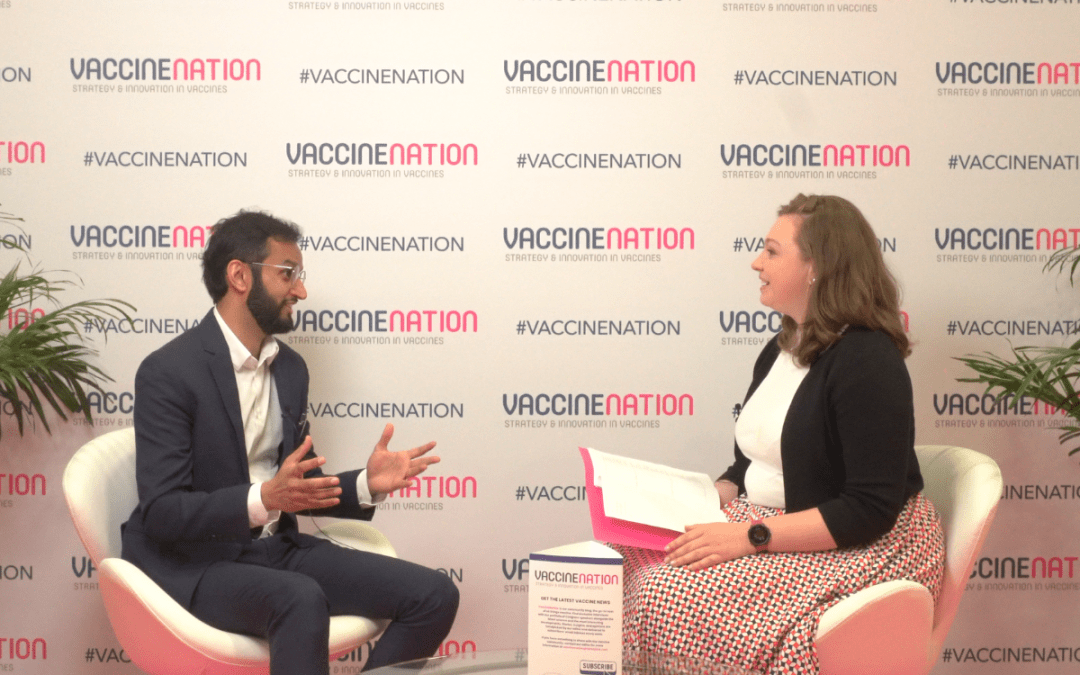
Our next interview from The World Vaccine Congress in Washington is with Ahmed Razzak from Acasus, the company making “brave change” in the global health world. Ahmed is Acasus’ Head of Partnerships, which means he helps start new projects and “expand the scale of our impact globally”. It was great to speak to Ahmed about the work he and the team are doing, and we hope that you enjoy the interview!
The mission
We begin by asking Ahmed for an insight into the team’s mission, which he suggests is “pretty simple”!
“We want to help governments help people.”
This is done in a variety of ways, but the main focus is on ensuring access to healthcare. For example, in the case of vaccines, the mission is to increase the number of children and adults who are vaccinated with life-saving vaccines, particularly in “challenging and difficult environments”.
“We’re particularly proud of the fact that we can do it in very underserved regions.”
Acasus’ website outlines some of these areas with several examples of how they are making a difference.
Who do you serve?
We asked a bit about the populations that are benefitting from Acasus’ mission, and while Ahmed emphasises that the team tackles “challenging and difficult” areas, they also “work at scale”. For example, in Pakistan, which has a population of over 200 million people, vaccination strategies should serve every child under 2, which means that all children should be beneficiaries. With “more and more” adult vaccinations becoming available, the target population is growing!
Meeting needs
Our next question considers the team’s profile in the space; are they meeting an unmet need or outcompeting others? Ahmed offers 3 parts to his answer. The first goes back to the “spirit” of why Acasus came into being around 10 years ago with an “unmet need” in implementation.
“We started Acasus to say ‘let’s fix that; let’s help governments implement’.”
While we have great capacity for strategy, Ahmed suggests that this can only take us so far:
“We want action.”
Acasus encourages this action from within Ministries, helping them to “get stuff done”.
The second part is about data, which Acasus uses as a “means to an end”. This means that the focus is not on data collection, but its use, and ensuring that insights can be shared and interpreted by governments to “resolve bottlenecks” and improve performance. This leads into the third part: “improving outcomes”.
“We’re obsessed with changing lives; we’re obsessed with tangible results.”
This means that the team puts results and impact at the centre of their work.
Why WVC?
As always, we conclude with an opportunity for our experts to share their reasons for being with us. Ahmed shares that this is a relatively new approach for his team.
“Over the past 10 years we’ve essentially put our heads down, rolled up our sleeves, and worked with governments on really being true to our mission…what we’ve not been very good at is telling people about it!”
However, Ahmed wasn’t just there to tell people about their work, but to share lessons, making them “more accessible”.
“We’re here to make sure that all of the brilliant organisations that are here learn more about how we do things, what we do.”
The team also conducted a roundtable on vaccine demand over the next ten years, asking questions about how we can tackle this challenge.
It was great to speak to Ahmed about Acasus’ work and we hope that you enjoy learning too!
For more conversations with our experts from the Congress in April do make sure you subscribe for weekly updates here!